
Kleinia grandiflora
Kleinia grandiflora
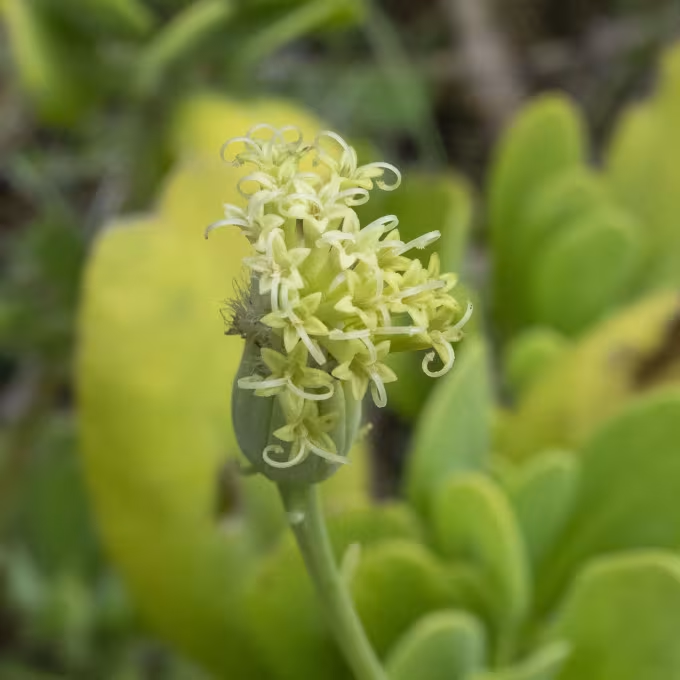
Description
Sowing dates
Sowing seeds of Kleinia grandiflora should be carried out in early spring to utilize natural light for optimal seedling development. The seeds need a light, well-draining substrate to prevent dampening off.
The seeds are placed on the surface of the soil and lightly covered with a fine layer of sand. Keeping the moisture levels constant but not waterlogged is critical during the initial germination phase.
Germination typically occurs in temperatures ranging from 22 to 25 degrees Celsius. Ensuring good air circulation once sprouts emerge is essential for the health of the young plants.
For vegetative propagation, stem cuttings are used. It is vital to let the cuttings dry for several days until a callus forms before placing them in the growing medium.
The transplantation of seedlings to individual containers should be done carefully to avoid damaging the delicate root system, using a potting mix suitable for cacti.
Growing requirements
As a member of the Asteraceae family, Kleinia grandiflora thrives in bright, direct sunlight. Insufficient light leads to etiolation, where the plant becomes weak and loses its natural form.
The culture requires a soil composition that mimics arid environments, typically a mix of coarse sand, perlite, and mineral soil, providing excellent drainage.
Watering must be sparse, following the soak-and-dry method. During the winter dormancy period, watering should be reduced significantly to prevent root decay.
Climate adaptability is limited to warm, frost-free regions. If grown in cooler climates, the plant must be kept indoors or in a greenhouse during winter months.
The plant is relatively low-maintenance, requiring fertilization only once or twice during the active growth season with a balanced, low-nitrogen succulent fertilizer.
Main diseases and pests
Root rot is the most common issue for Kleinia grandiflora, usually caused by overwatering or poor drainage. It is imperative to ensure the substrate dries out completely between waterings.
Mealybugs are a frequent pest, especially in dry, warm conditions. They tend to hide in the joints of the stems and leaves, making them difficult to detect early.
Spider mites may infest the plant if the air remains too dry for extended periods, necessitating careful monitoring of the plant's health.
Pest management involves using appropriate systemic insecticides or natural oils while ensuring the plant is not kept in a stagnant, humid environment.
Regular inspection of the root ball during repotting helps to identify early signs of illness, allowing for timely intervention and treatment of the succulent.