
Kleinia anteuphorbium
Kleinia anteuphorbium
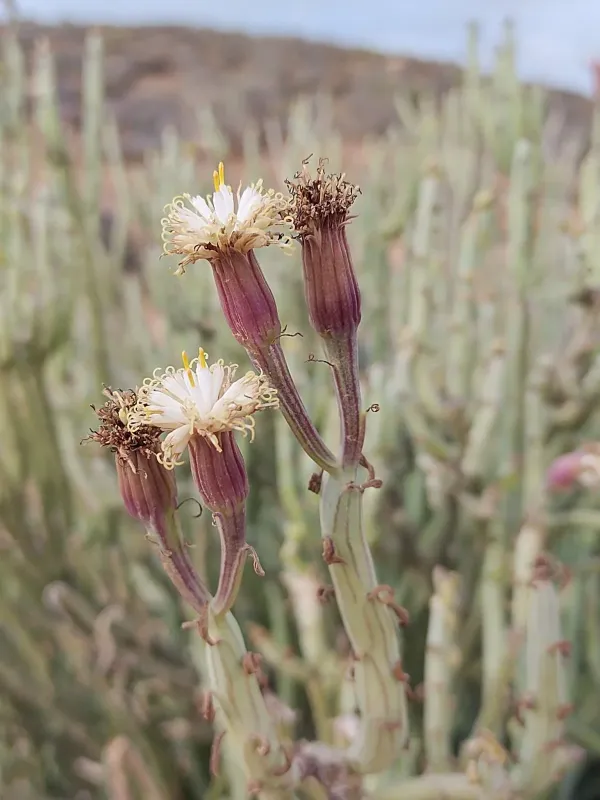
Description
Growing requirements
Kleinia anteuphorbium is a succulent shrub member of the Asteraceae family. It is characterized by its succulent, cylindrical, grey-green stems that show a high degree of drought tolerance.
Originating from the arid regions of Southern Africa, this plant has evolved to thrive in environments with limited rainfall and high solar radiation. Its morphology is perfectly adapted to survive in dry, rocky soils.
In terms of cultivation, the soil must be porous and highly mineralized. A typical potting mix for this species requires at least fifty percent inorganic components, such as pumice or coarse sand, to prevent root asphyxiation.
The climate requirements for Kleinia anteuphorbium include high levels of light and warm temperatures. It is not frost-hardy and requires a protected environment if winter temperatures drop below safe levels.
Horticultural use is primarily focused on arid landscape design and succulent collections. Due to its resilience, it serves as an excellent candidate for xeriscaping projects in semi-arid zones.
Main diseases and pests
The primary threat to the health of Kleinia anteuphorbium is root rot, typically caused by water-logging. Stagnant moisture around the root system often leads to irreversible tissue damage.
Mealybugs are the most common insect pests associated with this crop. These insects hide in the succulent folds of the plant and must be managed through periodic inspection and contact insecticide applications.
Scale insects can also infest the stems, extracting sap and causing localized yellowing or necrosis. Removal often requires a combination of physical cleaning and systemic pest control solutions.
Fungal pathogens such as Botrytis may thrive in poorly ventilated areas with high humidity levels. Maintaining air circulation is essential for the long-term survival of the crop in greenhouse conditions.
Early identification of pest infestations is vital to prevent systemic spread. Implementing a strict quarantine protocol for new plants is a standard best practice to maintain the health of the entire collection.