
Kleinia ficoides
Kleinia ficoides
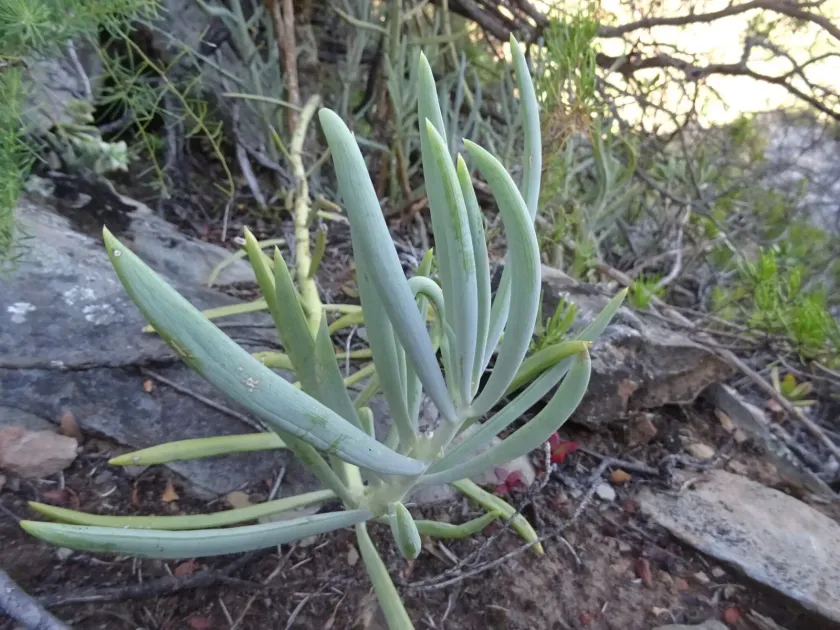
Description
Growing requirements
Kleinia ficoides is a succulent shrub belonging to the Asteraceae family, native to the arid environments of South Africa. It is highly valued for its striking, waxy, blue-grey foliage and upright growth habit, which makes it a unique addition to xeriscaping.
The plant thrives in full sun, which is essential to maintain its compact shape and intense coloration. Insufficient sunlight will result in etiolated, weak stems that lack the typical architectural appeal of the species.
Proper soil composition must prioritize drainage; a sandy or rocky substrate is mandatory to prevent root rot. The potting medium should be well-aerated to ensure that roots can breathe during the active growing season.
Temperature requirements are strictly defined by its natural habitat. Kleinia ficoides prefers warm conditions between 18 and 25 degrees Celsius and must be protected from freezing temperatures, which cause irreparable damage to its succulent tissues.
In terms of agricultural and horticultural use, this species is utilized as a hardy ornamental plant in regions with limited water resources, demonstrating excellent potential for sustainable urban landscape design.
Main diseases and pests
Mealybugs are the most common pests affecting Kleinia ficoides. They congregate in the tight axils of the leaves, where they extract plant sap, eventually leading to stunted growth and secondary infections.
Root rot, caused by overwatering or poorly draining soil, is a frequent threat. This condition is often fatal, as the succulent tissues cannot recover once the vascular system has been compromised by fungal decay.
Spider mites can become an issue during periods of low humidity. These pests cause discoloration and surface scarring on the foliage, significantly reducing the commercial and aesthetic value of the plant.
Managing these threats involves maintaining adequate airflow and ensuring a strict drying cycle between waterings. Removing infected leaves promptly can help prevent the spread of localized infestations.
Integrated pest management, including the use of neem oil or targeted systemic insecticides, is recommended when manual removal of pests is insufficient to control the population levels in larger cultivation areas.