
Kleinia neriifolia
Kleinia neriifolia
Description
Growing requirements
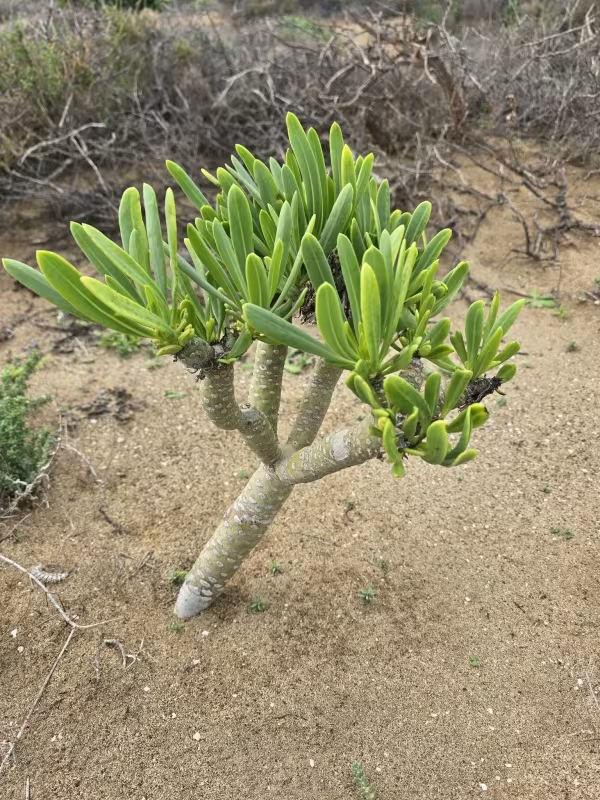
Kleinia neriifolia is a perennial succulent shrub belonging to the Asteraceae family. This species is native to the Canary Islands, where it thrives in arid, rocky environments, showcasing high adaptation to significant fluctuations in seasonal rainfall.
The plant features succulent stems that act as water reservoirs, allowing it to survive periods of prolonged drought. During the peak of the dry season, the plant sheds its narrow, oleander-like leaves to reduce transpiration and maintain metabolic stability.
The crop requires full sun exposure for healthy development. In agricultural or horticultural settings, it is essential to provide high light intensity to prevent etiolation and maintain the compact, characteristic form of the succulent shrub.
Soil requirements focus primarily on drainage. The substrate must be highly porous, typically a mix of mineral components like coarse sand, volcanic rock, or pumice. Poorly drained soils invariably lead to physiological distress and plant mortality.
Economically, Kleinia neriifolia is valued in xeriscaping and the ornamental trade. Its unique biological rhythm and architectural appearance make it a sought-after specimen for dry gardens and conservatory collections globally.
Main diseases and pests
The primary threat to the health of this culture is fungal infection caused by waterlogged soil. Excess moisture around the roots triggers rapid tissue decay, necessitating immediate intervention to prevent the loss of the entire specimen.
Mealybugs are the most persistent pest for this species, often congregating in the crevices between stems. Their activity can weaken the plant and serve as a vector for secondary viral or fungal infections, requiring systematic control methods.
Aphids can also infest the younger, more tender growth during the growing season. While less devastating than rot, their presence significantly reduces the plant's vigor and aesthetic appeal, necessitating the use of specialized, plant-safe pesticides.
Poor ventilation combined with high atmospheric humidity creates an environment conducive to mold growth. Maintaining adequate spacing between plants is crucial to ensure optimal airflow and prevent the development of surface pathogens.
Physical injuries to the succulent stems are highly dangerous, as they create entry points for pathogens. When handling or transplanting, it is vital to avoid bruising the tissues; otherwise, the plant must be kept dry until the wound has fully calloused.