
Kleinia mandraliscae
Kleinia mandraliscae
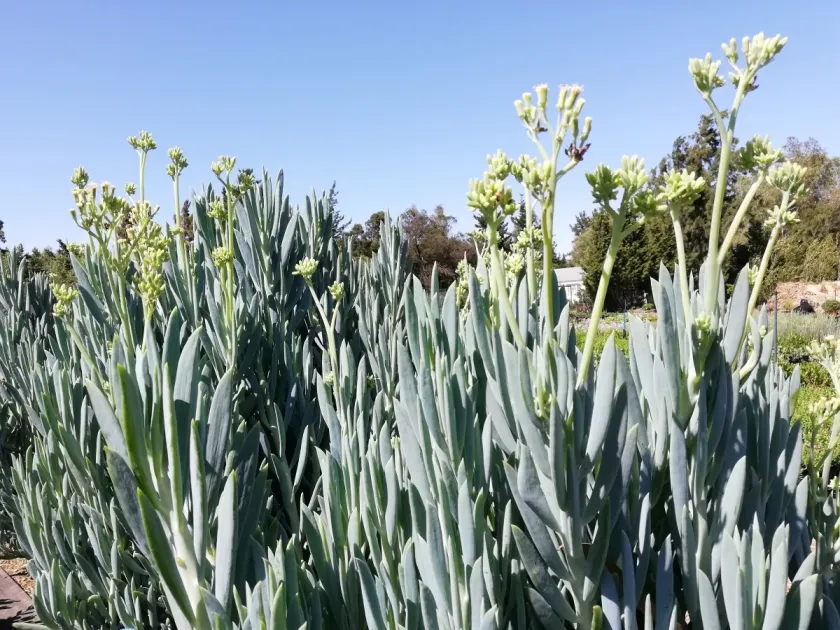
Description
Sowing dates
Propagation of Kleinia mandraliscae is most effectively achieved through stem cuttings. This process is best performed during the late spring or early summer when the plant is in its active growth phase.
Cuttings should be taken using a sharp, sterilized blade to ensure clean cuts. Before planting, it is essential to leave the cuttings in a dry area for several days to allow the ends to form a callous, which significantly reduces the risk of fungal infections.
The rooting medium should be a specialized succulent mix, characterized by high drainage and low organic content. The cuttings are inserted into the substrate and left in a bright location with indirect light until roots establish.
Watering should be withheld for the first week after planting to prevent the rot of the succulent tissue. Once roots have begun to develop, a light misting or very sparing watering schedule can be introduced.
Seed propagation is less common and significantly more complex due to the slow growth rate and specific temperature requirements. High-quality, well-draining soil and consistent warmth are mandatory for success from seed.
Growing requirements
Kleinia mandraliscae, commonly known as Blue Chalk Sticks, belongs to the Asteraceae family. This perennial evergreen succulent is native to South Africa, where it has evolved to thrive in arid and rocky environments.
The plant requires full sun exposure to maintain its vibrant, iconic blue-grey coloration. Insufficient light leads to etiolation, causing the stems to become weak, thin, and lose their dense, compact appearance.
Soil requirements focus on drainage. The medium must be porous, ideally containing a blend of horticultural sand, pumice, and minimal compost to ensure that water never stagnates around the root system.
This species is highly drought-tolerant and requires very infrequent watering. During the dormant winter season, water should be almost entirely withheld to mirror the plant's natural arid habitat and prevent root damage.
Temperature tolerance is limited; Kleinia mandraliscae is not frost-hardy. It thrives in temperatures ranging from 18 to 25 degrees Celsius and should be protected from temperatures dropping below 5 degrees Celsius.
Main diseases and pests
The primary threat to the health of Kleinia mandraliscae is root rot caused by overwatering or poorly draining soil. This condition is often fatal and can spread rapidly through the succulent tissues of the stems.
Mealybugs and spider mites are the most frequent pests associated with this plant. These insects thrive in dry conditions and often congregate in the sheltered areas between leaves or at the plant's nodes.
Integrated pest management strategies involve regular monitoring and the use of insecticidal soaps or systemic treatments when an infestation is detected. Keeping the plant area clean and well-ventilated helps prevent these pests.
Proactive care involves ensuring that the plant is not overcrowded and that air circulation is optimal, as stagnant air can foster the growth of various pathogens and mold in succulent collections.
- Use pots with ample drainage holes.
- Monitor for white, cotton-like masses indicating mealybugs.
- Avoid touching the blue waxy layer on the leaves to preserve its color.
- Ensure the soil is completely dry before adding water.
- Provide bright, direct sunlight for maximum performance.