
Kenaf
Hibiscus cannabinus L.
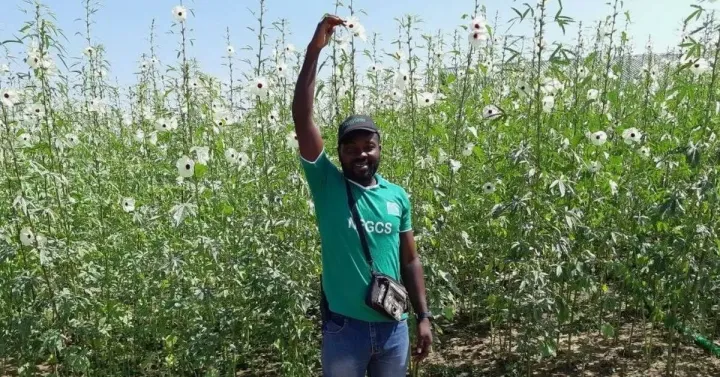
Description
Sowing dates
Kenaf sowing begins when soil temperatures at a depth of 10 centimeters reach 12–14°C. Optimal planting dates typically fall in the second half of April or early May, depending on the specific regional climate.
Soil moisture is a critical factor during planting, as seeds require significant water for successful germination. The crop is usually sown in rows with spacing between 15 and 45 centimeters, adjusted based on field fertility and equipment type.
The seeding rate for kenaf is approximately 20–25 kilograms per hectare, provided the seeds have high germination rates. Planting depth should be maintained between 3 and 5 centimeters, depending on the soil texture and moisture levels.
Post-emergence harrowing is essential to break up soil crusts and control early weed growth. Thinning may be necessary if plant density exceeds the levels required for optimal straight stem development.
Overcrowding can negatively impact root system development and biomass accumulation. Proper spacing ensures the development of straight, lightly branched stems, which is essential for producing high-quality, long bast fibers.
Growing requirements
Kenaf is a member of the Malvaceae family and is classified as a warm-season, short-day plant. It has high thermal requirements, needing average daily temperatures above 20°C for vigorous growth.
The crop is highly sensitive to frost, which can easily destroy young seedlings. During the active vegetative stage, kenaf requires consistent moisture because its large leaf surface area leads to high evapotranspiration rates.
Ideal soils for kenaf are deep, fertile, and exhibit a neutral or slightly alkaline pH. The best performance is typically seen on well-aerated alluvial or loamy soils rich in organic matter.
Waterlogging and poor drainage are detrimental to the root system. Despite being water-intensive, kenaf does not tolerate swampy conditions where roots are susceptible to rapid decay.
Adequate nitrogen and potassium levels are crucial for kenaf, as it produces a vast amount of biomass in a short growing season. Balanced mineral fertilization significantly boosts the final fiber yield per hectare.
Yield
Kenaf yields depend on agricultural management and environmental conditions, typically ranging from 8 to 15 tons of dry stems per hectare. On highly fertile soils with proper irrigation, yields can be significantly higher.
The fiber yield usually accounts for about 18–22% of the total stem biomass. Beyond the fiber, kenaf produces substantial amounts of woody core, which is widely used in the construction and furniture industries for particleboard manufacturing.
Seed production is another vital economic component. Seed yields generally range from 0.5 to 1 ton per hectare, ensuring a consistent supply for future planting seasons.
Harvesting for seeds occurs after the seed pods have fully matured, when seed moisture content drops to 12–14%. Timely harvesting is critical to prevent seed shattering, which can cause significant field losses.
The overall economic viability of kenaf depends on both fiber and secondary product utilization. Integrated biomass processing is the most efficient way to maximize profitability for growers.
Main diseases and pests
Common diseases affecting kenaf include anthracnose and fusarium wilt, which damage both the stems and root systems. Effective prevention relies on crop rotation and the use of resistant crop varieties.
Key pests include the cotton bollworm and various aphid species. These insects damage both foliage and young shoots, significantly slowing plant growth and degrading the quality of the harvested fiber.
Pest management is based on integrated protection principles, combining agronomic practices with targeted, approved insecticides. Early detection of pest pressure is the best way to minimize chemical use.
Weeds pose a serious threat during the early stages of kenaf development. Mechanical inter-row cultivation is the standard method for weed control, ensuring that young plants maintain access to light and essential nutrients.
Strict quarantine measures and regular monitoring of field conditions throughout the growing season are essential prerequisites for a healthy, marketable harvest.
Harvesting
Harvesting kenaf for fiber is best performed at the onset of the flowering stage, when stems achieve maximum strength and optimal bast fiber quality. Delayed harvesting results in coarser fibers and a loss of natural elasticity.
The harvest process is typically mechanized using mowers or combine harvesters. Cut stems are bundled and left in the field for initial drying to reduce moisture before further processing.
After drying, stems undergo primary processing, such as retting or mechanical decortication. Traditional retting in water tanks helps separate the bast fiber from the woody core.
Modern industrial methods utilize decorticators to separate fiber from the woody core immediately after harvest, eliminating the need for time-consuming retting. This approach improves processing efficiency and reduces environmental impact.
The final fiber is baled for transportation to textile or paper mills. Proper logistics and storage conditions are essential to prevent fiber decay and maintain structural strength over long periods.