
Hibiscus coccineus
Hibiscus coccineus Walter
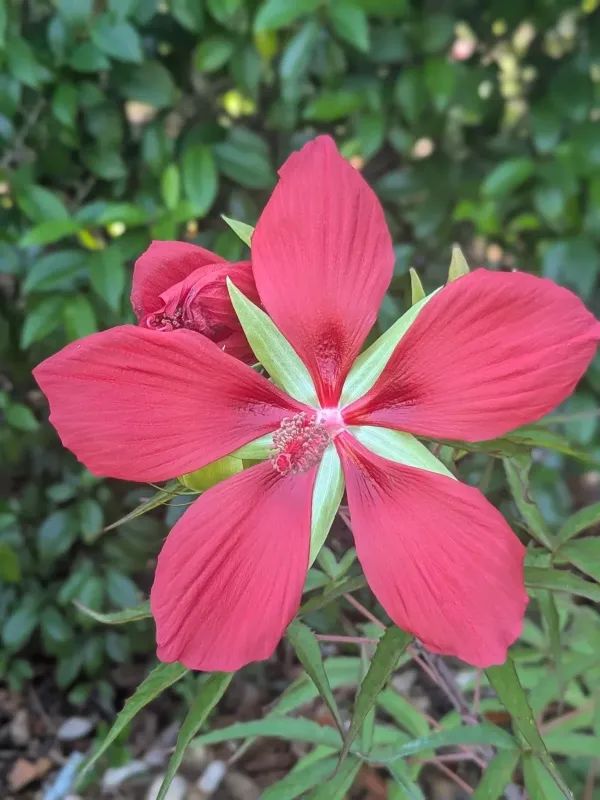
Description
Sowing dates
Seeds of Hibiscus coccineus should be sown indoors in late winter or early spring to ensure a long growing season. Scarifying the seeds by lightly nicking the seed coat can significantly improve germination rates before sowing them in a moist starting mix.
Place the seeds in a warm environment with consistent temperatures between 70–80 degrees Fahrenheit. Proper lighting is essential for developing strong, stocky seedlings that can withstand transplanting later in the season.
Once the seedlings develop two sets of true leaves, they should be transplanted into individual containers. This step is vital for root development and prevents the crowding that often stunts the growth of young mallow plants.
Hardening off the seedlings is a necessary procedure before moving them outdoors. Gradually introduce the plants to sunlight and cooler temperatures over a period of 10 to 14 days to reduce transplant shock.
Final planting should occur once all danger of frost has passed. Ensure that the planting site has been amended with organic matter to provide the necessary nutrients for the first season of vigorous growth.
Growing requirements
Hibiscus coccineus, a member of the Malvaceae family, is native to the southeastern United States. It is a moisture-loving perennial that thrives in sunny locations with constant access to water, making it perfect for bog gardens or pond margins.
The plant performs best in rich, loamy soils with a slightly acidic to neutral pH. While it is known for its tolerance to standing water, it also requires high levels of soil fertility to support its rapid growth and large, striking red blooms.
Full sun is essential for this species; providing at least six to eight hours of direct sunlight per day ensures the production of its signature star-shaped crimson flowers throughout the summer and early autumn.
In colder zones, the plant behaves as a die-back perennial, with the stems losing their vitality after the first hard frost. A thick layer of organic mulch applied to the crown in late autumn protects the rhizomes during winter dormancy.
Regular fertilization with a balanced, slow-release fertilizer or high-potassium liquid feed during the active growth phase enhances the flowering capacity of the plant significantly.
Main diseases and pests
Aphids and spider mites are the most common pests affecting Hibiscus coccineus. These insects tend to congregate on the undersides of leaves and on the developing buds, weakening the plant if not controlled early.
Fungal diseases, including leaf spot and powdery mildew, can appear during periods of high humidity and poor air circulation. Proper spacing between plants helps to reduce the incidence of these common botanical issues.
Root rot remains a threat if the soil structure fails to provide a balance between moisture retention and aeration. Monitoring the soil condition regularly prevents the development of anaerobic environments that favor pathogens.
Integrated pest management strategies, such as introducing beneficial insects or using targeted soaps and oils, are preferred to maintain the health of the plant without damaging the local ecosystem.
- Aphids (Aphis gossypii)
- Two-spotted spider mites
- Leaf spot
- Powdery mildew