
Coral hibiscus
Hibiscus schizopetalus (Mast.) Hook. f.
Description
Growing requirements
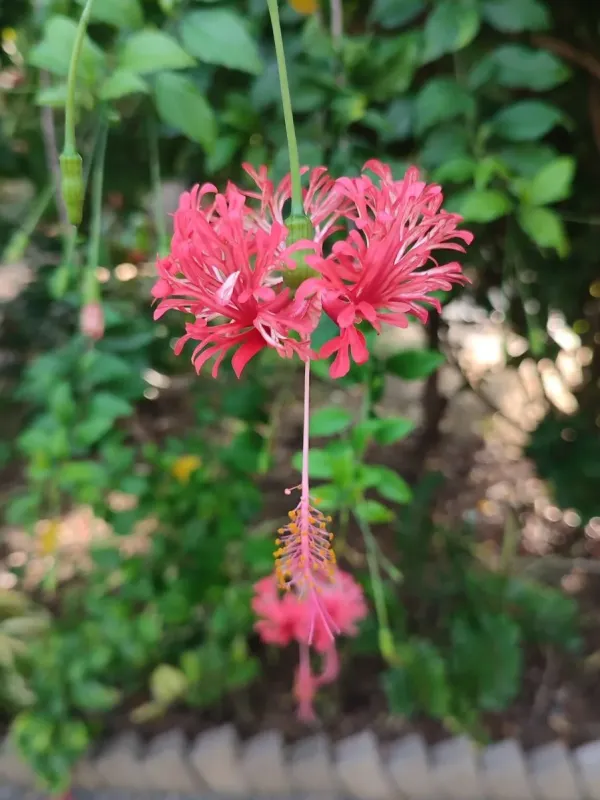
The Coral hibiscus (Hibiscus schizopetalus) is a perennial woody shrub belonging to the Malvaceae family. It is distinctively recognized by its pendulous flowers with deeply fringed, reflexed petals that resemble delicate lace, attracting numerous pollinators in its native range.
Originating from tropical East Africa, specifically Kenya and Tanzania, this species requires specialized environmental conditions. In commercial horticulture, it is cultivated primarily in controlled environments such as greenhouses and botanical conservatories due to its limited cold tolerance.
The climate requirements for optimal growth involve consistent tropical temperatures, ideally between 20°C and 28°C. Any exposure to frost or temperatures below 10°C can result in severe physiological damage or the total loss of the specimen.
Soil management for Hibiscus schizopetalus focuses on providing a well-draining, nutrient-rich potting medium. A mixture of loam, peat, and perlite is often utilized to ensure sufficient aeration while maintaining necessary moisture levels for the root system.
Agricultural practices include frequent maintenance, such as regular pruning to manage its spreading growth habit and encourage denser foliage. Consistent, moderate irrigation is required; the soil should be kept moist but never waterlogged to avoid root rot occurrences.
Main diseases and pests
Common pests affecting this crop include spider mites, mealybugs, and scale insects. These organisms thrive in the dry, warm environments often found in greenhouses, necessitating vigilant monitoring and biological or chemical control strategies.
Fungal diseases are largely managed through proper air circulation and strictly controlled humidity levels. Overcrowding of plants or poor ventilation frequently leads to outbreaks of powdery mildew and leaf spot, which can significantly reduce the ornamental value of the crop.