
Confederate rose
Hibiscus mutabilis L.
Description
Growing requirements
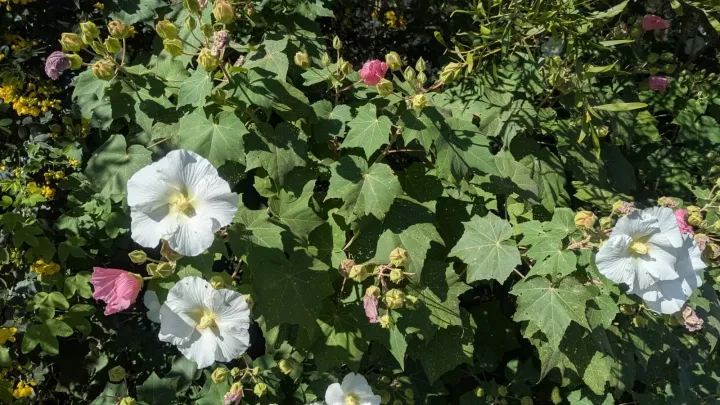
The Confederate rose (Hibiscus mutabilis) is a prominent member of the Malvaceae family, native to Southeastern Asia. It is a large perennial shrub known for its spectacular floral transformation throughout the day.
Botanically, the plant is characterized by its large, palmate leaves and delicate flowers that bloom white or pink in the morning and deepen to a dark red color by nightfall. This phenomenon is caused by the chemical degradation of anthocyanins in the petals.
The plant thrives in tropical and subtropical climates and requires full sunlight to partial shade for optimal growth. It is highly sensitive to frost, which limits its outdoor cultivation to temperate areas unless protected during winter months.
Soil requirements involve a rich, well-draining substrate with an acidic to neutral pH. Providing consistent moisture is crucial, as the plant can suffer from leaf wilting during dry periods if not irrigated adequately during its active growth phase.
Care practices should include regular pruning, which helps maintain a compact shape and promotes more vigorous branching. Fertilizing with balanced plant food during spring and summer encourages a prolonged blooming period until the first frost.
Main diseases and pests
Common pests affecting this cultivar include aphids, whiteflies, and spider mites. These insects tend to colonize the undersides of the leaves, necessitating the use of horticultural oils or systemic insecticides if infestations occur.
Root rot and fungal leaf spots are the primary pathological threats, usually triggered by poor drainage or excessive humidity. Ensuring proper spacing between plants and monitoring moisture levels are essential strategies to maintain the long-term health of the shrub.