
Soft Jurinea
Jurinea mollis
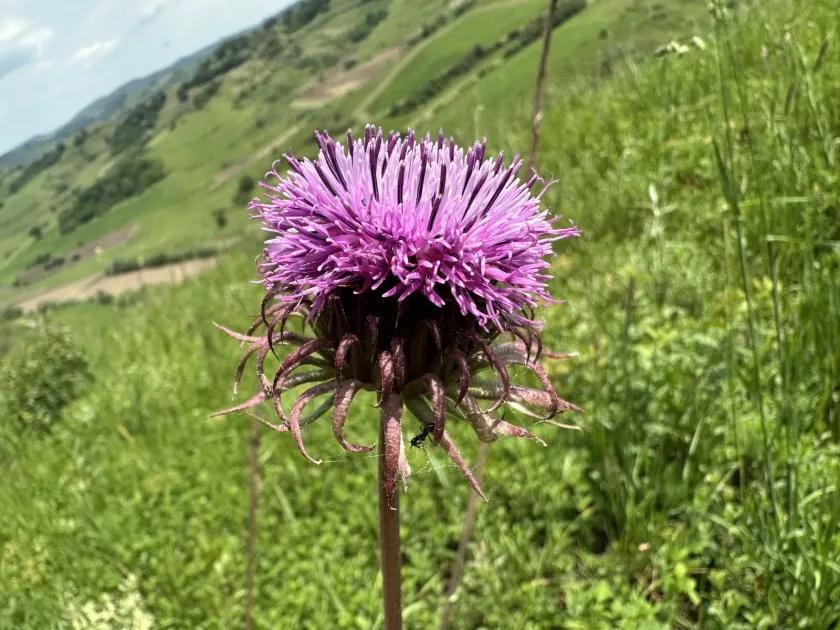
Description
Growing requirements
Soft Jurinea (Jurinea mollis) is a perennial herbaceous plant belonging to the Asteraceae family. It is widely recognized for its adaptation to arid steppe and meadow-steppe environments across its natural range.
The plant is native to the steppe zones of Eurasia. It prefers growing on stony, chalky, or limestone soils, demonstrating high tolerance to nutrient-poor substrates and alkaline soil conditions where few other species can thrive.
Botanically, Jurinea mollis is characterized by a basal rosette of leaves covered with grayish tomentose hairs. This adaptation significantly reduces transpiration, allowing the plant to withstand prolonged dry spells and intense heat.
Climatic requirements focus on high levels of sunlight exposure and well-drained conditions. Excessive moisture is the primary factor limiting its growth; therefore, sites must have excellent soil drainage to prevent root rot.
Regarding its utility, the plant serves as a valuable nectar source for pollinators and a potential candidate for land reclamation projects. Its root structure is efficient for stabilizing soil on eroded slopes, providing ecological benefits.
Main diseases and pests
The main threats to Jurinea mollis include intensive livestock grazing, which negatively affects the plant's reproductive cycle and overall population density in natural habitats.
In cultivation, the plant is susceptible to fungal infections if kept in high humidity or stagnant air environments. Good spatial management is required to promote airflow and minimize the risk of pathogen accumulation.
Common pests like aphids may occasionally affect the plant, but these are generally managed through integrated pest management practices and maintaining plant vigor through proper site selection.
Winter survival is compromised by waterlogging. When moisture remains in the soil during freezing periods, the crown of the plant is likely to decay, posing a major risk to plant survival.
Overall, disease pressure is relatively low when the plant is kept in its preferred environment. Ensuring the soil is light, porous, and free-draining is the most effective preventative measure against potential threats.