
Jurinea calcarea
Jurinea calcarea
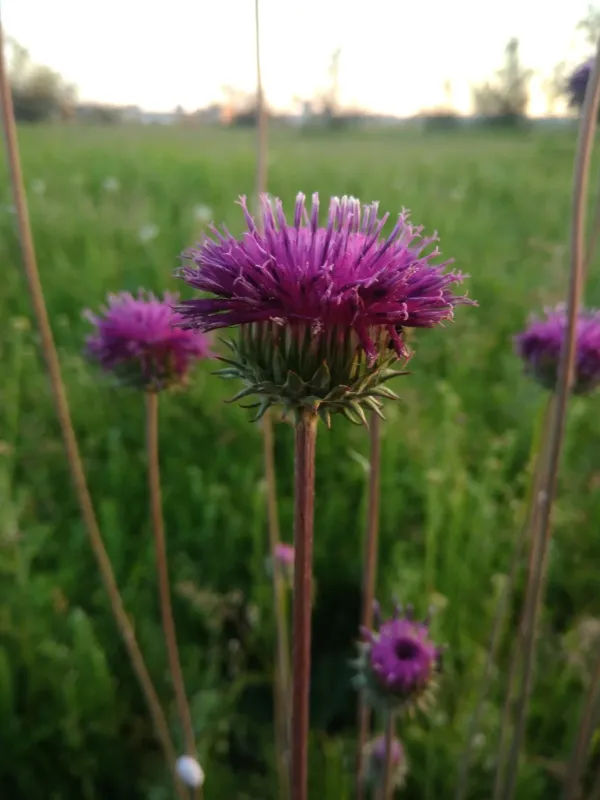
Description
Sowing dates
Jurinea calcarea is a perennial herbaceous plant, so seeding is typically carried out during the autumn period to allow for natural stratification throughout the winter.
Under cultivation conditions, seeds are sown into open soil or nursery beds at a depth of 1-2 centimeters, ensuring firm contact between the seed and the soil substrate.
Spring sowing is only viable if the seeds have undergone a cold stratification process in a refrigerated environment for at least 1-2 months to improve germination rates.
A crucial factor during sowing is ensuring an area free of significant shading, as this species is highly photophilous at every stage of its lifecycle.
In commercial cultivation, spacing is calculated based on the needs of the taproot system, which is characteristic of plants adapted to rocky or nutrient-poor limestone soils.
Growing requirements
Jurinea calcarea belongs to the Asteraceae family and is a petrophytic species that naturally thrives on chalk and limestone outcrops, requiring specific alkaline conditions.
The crop demands well-drained, alkaline soils with high calcium content; it is highly intolerant of waterlogging, which inevitably leads to the rotting of the taproot.
The plant exhibits significant drought tolerance, which is supported by its botanical adaptations, such as leaf pubescence that reduces transpiration and protects against thermal stress.
Optimal climatic conditions include exposed areas with high solar intensity and moderate annual precipitation, typical of semi-arid steppe environments.
From an agrotechnical perspective, it is essential to minimize competition from invasive weeds, as the plant grows slowly and struggles to establish in dense vegetation.
Yield
In an agricultural context, this plant is valued less as a mass-market crop and more for its potential as a honey plant and a specialized element of ecological landscape design.
The nectar production of Jurinea calcarea is quite substantial, attracting a wide range of pollinators and facilitating high-quality cross-pollination within its populations.
Seed yield is moderate, and harvesting requires careful timing because the seed heads tend to disperse seeds quickly once they reach full maturity.
The biomass of the plant can be utilized in herbalism, although industrial harvest volumes are often restricted by conservation status and the slow growth rate of the species.
A stable yield of both biomass and seeds is typically achieved by the third year of vegetation once the plant has fully developed its mature root structure.
Main diseases and pests
Root rot is the most significant threat to the crop, typically occurring when agrotechnical standards are breached, such as over-irrigation or planting in heavy, moisture-retaining soils.
Common pests include insects that target the inflorescences, such as certain types of weevils, which can reduce seed production potential by as much as 40 percent.
While the plant shows strong resistance to common leaf diseases, high humidity levels can occasionally lead to powdery mildew, requiring preventive fungicide applications.
Invasive grasses and fast-growing weeds pose a major threat to seedling establishment, often capable of overwhelming and destroying young patches in the first year.
Damage to the roots by rodents during the winter can be fatal to the plant, making it necessary to implement protective measures in areas with high pest activity.
Harvesting
Harvesting seeds must be performed selectively as the seed heads darken, ensuring that seeds are collected before they are dispersed by the wind.
Harvested inflorescences should be dried in a well-ventilated, shaded area to prevent direct sunlight exposure, which helps maintain the quality and viability of the seeds.
After the drying process, the seeds are gently threshed and cleaned of debris using screens of appropriate mesh sizes to account for their small, sensitive nature.
To preserve long-term viability, seeds should be stored in paper envelopes in low-humidity environments, which guarantees high germination rates for the following season.
When harvesting for medicinal purposes, the above-ground portion should be cut during the peak flowering phase using sharp tools to avoid damaging the base of the stem.