
Jurinea glycacantha
Jurinea glycacantha
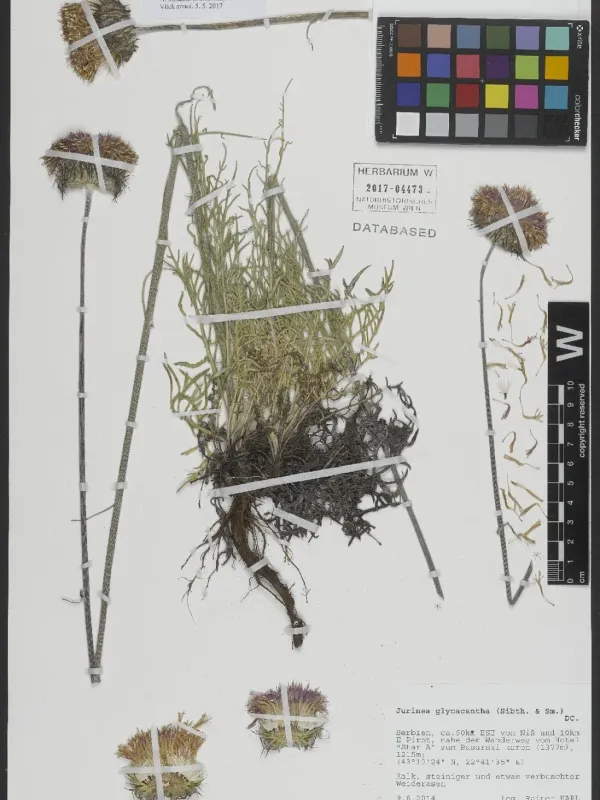
Description
Sowing dates
Jurinea glycacantha is a perennial herb belonging to the Asteraceae family. In agricultural cultivation, seeds are typically sown in late autumn for natural stratification or in early spring.
The optimal planting depth for the seeds is 1–2 centimeters, as they require sufficient contact with the soil and protection from drying out during the germination process.
A row-seeding method with spacing of approximately 45 cm is recommended to allow the plants adequate space to develop their root systems during the first year.
As the plant develops relatively slowly during the initial vegetative phase, it is vital to ensure effective weed control to minimize competition for nutrients.
Pre-treatment of seeds with growth stimulants can significantly improve germination rates and help achieve a more uniform plant stand in the field.
Growing requirements
Originating from steppe environments, this crop is well-adapted to arid climates and requires full sunlight for optimal growth and biomass accumulation.
The plant thrives in well-drained, carbonate-rich soils, including loams and chernozems, showing particular adaptability to soils with alkaline tendencies.
It exhibits remarkable drought and salinity tolerance, making it an excellent candidate for cultivation on marginal or degraded agricultural lands.
While the plant is hardy, moderate fertilization with phosphorus and potassium is beneficial for strengthening the floral structures and root development.
Proper water management is essential; while drought-tolerant, the plant must be protected from waterlogging to prevent root decay and fungal infections.
Main diseases and pests
Jurinea glycacantha generally possesses strong natural resistance to many common agricultural pests and soil-borne diseases.
However, wireworms can cause damage to the root system, particularly in newly established fields where soil conditions remain undisturbed for long periods.
Under conditions of high humidity or poor soil drainage, the plants may become susceptible to Fusarium wilts, which pose a threat to plant longevity.
Aphids can occasionally cluster on the inflorescences during the budding phase, necessitating targeted monitoring to protect the quality of the harvested biomass.
Integrated pest management, including crop rotation and mechanical soil cultivation, remains the most effective strategy for maintaining crop health.