
Japanese astilbe
Astilbe japonica (C. Morren & Decne.) A. Gray
Description
Growing requirements
Japanese astilbe (Astilbe japonica) is a perennial flowering plant belonging to the Saxifragaceae family. Native to the mountainous regions of Japan, this species has adapted to moist, cool woodland environments, making it a popular choice for shaded garden areas.
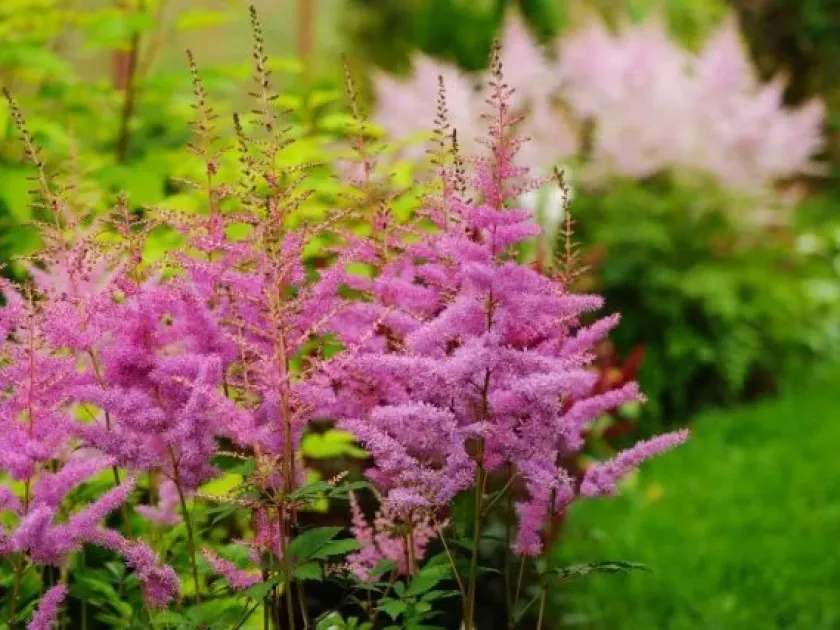
The plant features a stout rhizome and dark green, fern-like pinnate leaves. During the blooming season in early to mid-summer, it produces erect panicles of dense, tiny flowers that range in color from pure white to deep pink and red.
The core requirement for successful growth is consistent moisture. The soil should be fertile, humus-rich, and possess good drainage capabilities to prevent root rot. Partial shade is essential, as the plant is sensitive to intense heat and prolonged direct sun exposure.
General maintenance includes regular watering, particularly during dry spells, and applying a layer of organic mulch to keep the roots cool and retain soil moisture. Nutrient requirements are best met by applying balanced fertilizers at the start of the spring season.
In landscaping, Japanese astilbe is primarily used as an ornamental perennial. Its ability to thrive in shaded environments makes it a standard choice for woodland gardens, border plantings, and areas surrounding water features where it creates a dramatic floral display.
Main diseases and pests
The most common pests affecting this crop include the tarnished plant bug and various species of nematodes. Infestations can lead to stunted growth and distorted foliage, requiring vigilant monitoring during the peak growing season to manage pest populations.
Disease pressure is often linked to poor air circulation or waterlogged soil, which favors the development of leaf spot and powdery mildew. Maintaining proper spacing between plants and ensuring adequate soil drainage are the primary cultural practices for disease prevention.