
Astilbe simplicifolia
Astilbe simplicifolia Makino
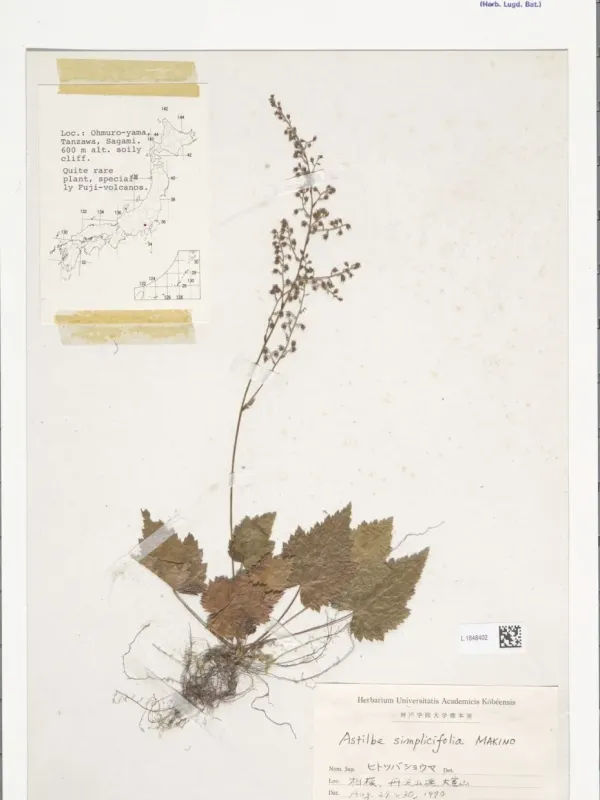
Description
Growing requirements
Astilbe simplicifolia, commonly known as the miniature astilbe or simple-leaved astilbe, belongs to the Saxifragaceae family. This species is native to Japan, where it thrives in moist, shaded environments, distinguishing itself from other astilbe varieties by its distinct, shiny, and often deeply cut foliage.
The plant is highly valued in horticulture for its compact habit and graceful, arching racemes of flowers. It serves as an excellent ground cover or an accent plant in woodland garden settings where dappled sunlight and consistently moist soil are present.
Cultivation success relies heavily on soil management. Astilbe simplicifolia requires a rich, moisture-retentive, yet well-drained substrate. It does not tolerate prolonged drought, which makes regular irrigation essential, especially during high-temperature periods in the summer.
Shade tolerance is a key characteristic of this species. While it appreciates some morning light, intense afternoon sun is detrimental, often causing leaf scorch and premature wilting. Placement in areas with northern or eastern exposure is highly recommended for best results.
Maintenance involves organic mulching, which helps preserve soil moisture and provides essential nutrients as it decomposes. A layer of compost applied in early spring supports healthy growth and vigorous flowering throughout the season.
Main diseases and pests
The most significant pests affecting this plant include nematodes, which can stunt overall development and cause malformations in the leaves and buds. Soil sanitation and planting in disease-free locations are critical preventive measures.
Spittlebugs are frequently observed on the foliage, feeding on plant sap. Although their presence is often more cosmetic than deadly, large infestations can weaken the plant, requiring the use of horticultural soaps or specific insecticides.
Root rot is a major threat, particularly in poorly drained or waterlogged soils. Ensuring excellent drainage through the addition of organic matter and coarse grit can significantly reduce the incidence of this fungal issue.
Leaf spot pathogens can occur under conditions of high humidity and poor air circulation. Removing affected foliage and ensuring adequate space between plants helps mitigate the risk of spreading these fungal infections.
General plant vigor is the best defense against pests and diseases. By strictly adhering to water and site requirements, gardeners can minimize the need for chemical intervention and keep their astilbes thriving.