
Arends Astilbe
Astilbe x arendsii H. Junge
Description
Growing requirements
Arends Astilbe (Astilbe x arendsii) is a complex group of hybrid herbaceous perennials belonging to the Saxifragaceae family. Developed by the German breeder Georg Arends, these cultivars were created by crossing several Asian species, resulting in plants known for their impressive plume-like inflorescences.
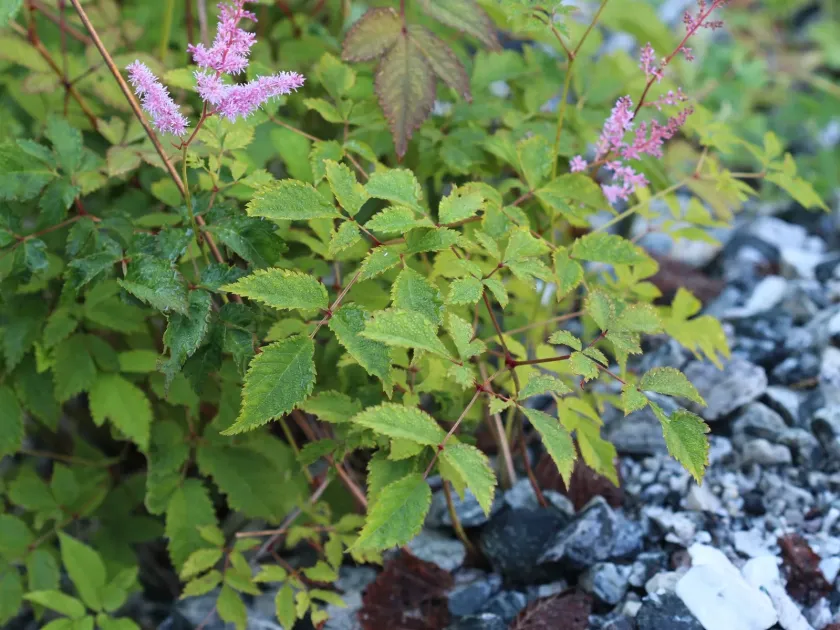
The plant features lush, fern-like compound foliage and vertical flower spikes in shades of white, pink, crimson, and lilac. The structural integrity of the plant depends on its vigorous rhizomatous root system, which allows it to thrive in cool, humid environments throughout the growing season.
Cultivation requires semi-shaded locations with protection from harsh afternoon sun. While they are resilient in various climates, they perform best in regions where moisture remains constant, as the foliage is prone to scorching under direct, intense light and heat without sufficient irrigation.
The ideal soil is moisture-retentive, rich in organic matter, and slightly acidic. It is crucial to maintain high soil fertility by incorporating compost or well-rotted manure, which promotes optimal growth and vibrant color intensity during the peak blooming period.
Maintenance practices center on consistent moisture management. A layer of organic mulch is essential for regulating soil temperature and retaining water. In late autumn, gardeners should cut the dead foliage down to the base to protect the plant during its winter dormancy period.
Main diseases and pests
The most significant pests affecting this culture are root-knot nematodes, which cause gall formation on the roots and severely inhibit nutrient uptake. Prevention includes inspecting nursery stock and ensuring the garden site is free from previous infestations of these soil-borne parasites.
Fungal diseases such as powdery mildew and various leaf spot pathogens can occur, particularly when humidity is high and airflow is restricted. Proper spacing between plants and avoiding overhead irrigation during evening hours are effective strategies to minimize the risk of disease development.