
Astilbe crispa
Astilbe x crispa (Arends) Bergmans
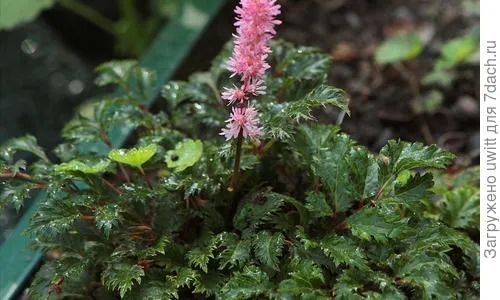
Description
Growing requirements
Astilbe crispa is a distinct dwarf cultivar belonging to the Saxifragaceae family. This perennial herb is highly valued by horticulturists for its dense, dark green, and curly foliage, which provides texture to shaded areas in the garden.
The plant originates from European hybrid breeding programs, specifically refined by Arends to achieve a compact, slow-growing habit that typically reaches only 20 to 30 centimeters in height.
Optimal growth conditions require partial shade with protection from direct noon sunlight. The environment should remain cool and consistently humid to prevent the scorched leaf edges that often occur in dry, sunny conditions.
The soil must be rich in organic matter and possess excellent moisture-retention capabilities. Incorporating peat or well-rotted compost into the planting site is essential for sustaining the long-term vitality of the root system.
Proper cultivation practices emphasize irrigation management. Because this cultivar is sensitive to drought, maintaining a mulch layer is vital to regulate soil temperature and conserve moisture during peak summer months.
Main diseases and pests
The most significant pest threats for this species include foliar nematodes, which cause yellowing and necrosis of the leaves, and root-knot nematodes that severely weaken the plant structure.
Aphids can frequently colonize the flower spikes during the budding phase. If left untreated, they can cause stunted growth and provide an entry point for secondary fungal or viral infections.
Powdery mildew is a common fungal issue that manifests as a white, dusty coating on the leaves, usually appearing in conditions of low air circulation or high humidity with stagnant air.
Root rot, driven by stagnant water or poor drainage, is a lethal condition for Astilbe crispa. To mitigate this risk, gardeners should ensure the growing medium is well-aerated and free of waterlogging.
Garden hygiene is paramount for disease control. Removing and destroying infected plant tissue promptly at the end of the season prevents the overwintering of pathogens that could infest new growth.