
Jacobaea leucophylla
Jacobaea leucophylla
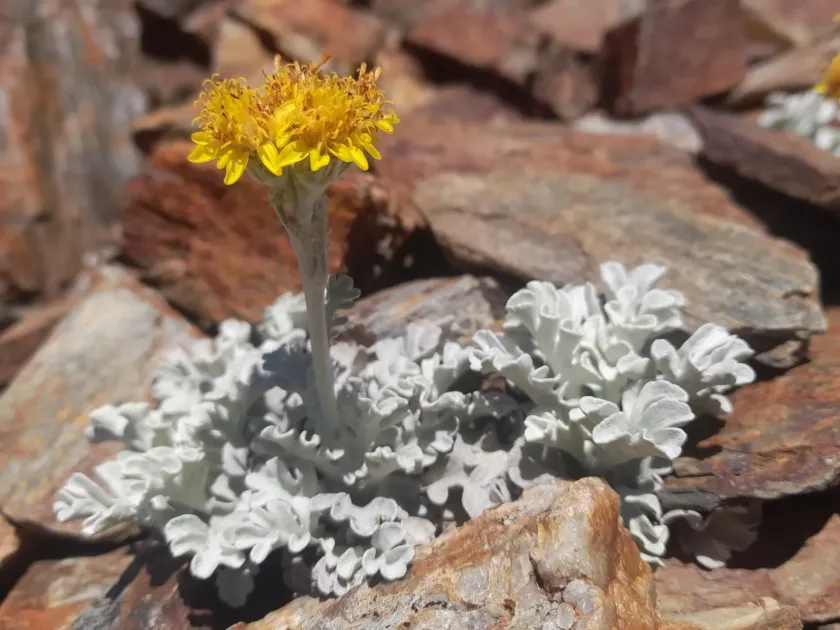
Description
Growing requirements
Jacobaea leucophylla, a member of the Asteraceae family, is a perennial plant renowned for its distinct white-tomentose (hairy) leaves. This species originates from high-altitude mountainous regions where it thrives on rocky slopes and screes.
The botanical structure of this plant is specifically adapted to high UV radiation and extreme temperature fluctuations. Its silver-white hairs act as a natural reflector, protecting the tissues from dehydration and overheating in sunny environments.
Requirements for cultivation include exceptionally well-draining soil, ideally rocky or gravelly substrates with a neutral to slightly alkaline pH. Clay soils are generally unsuitable unless significantly modified with drainage materials.
Exposure to full sunlight is critical for maintaining the plant's structural integrity and aesthetic silver appearance. Even partial shade results in weak, leggy growth and a loss of the signature white coating on the foliage.
Agrotechnical maintenance focuses on a xeriscaping approach, emphasizing drought tolerance. Supplemental watering should be minimized to prevent stagnant moisture, which is the primary cause of failure in this species.
Main diseases and pests
Root rot caused by excessive soil moisture and poor drainage is the primary cause of mortality in Jacobaea leucophylla. Preventing crown rot is essential, often achieved by applying a layer of coarse gravel around the base.
Pests such as aphids and spider mites may target the plant during hot, dry spells. Monitoring and early intervention with mild horticultural soaps are usually sufficient to manage these infestations effectively.
Fungal issues like powdery mildew can emerge during humid summers. Improving air circulation around the plants and avoiding overhead irrigation can significantly reduce the incidence of these fungal pathogens.
Winter survival is typically robust, provided the ground does not remain waterlogged. In particularly harsh climates, protection from freezing rain or ice crusts is recommended for young established plants.
Avoid heavy nitrogen application, as it encourages soft growth that is more susceptible to frost damage and pest infestation. A slow-release, low-nitrogen fertilizer is preferred if nutrient supplementation is necessary.