
Jacobaea adonidifolia
Jacobaea adonidifolia
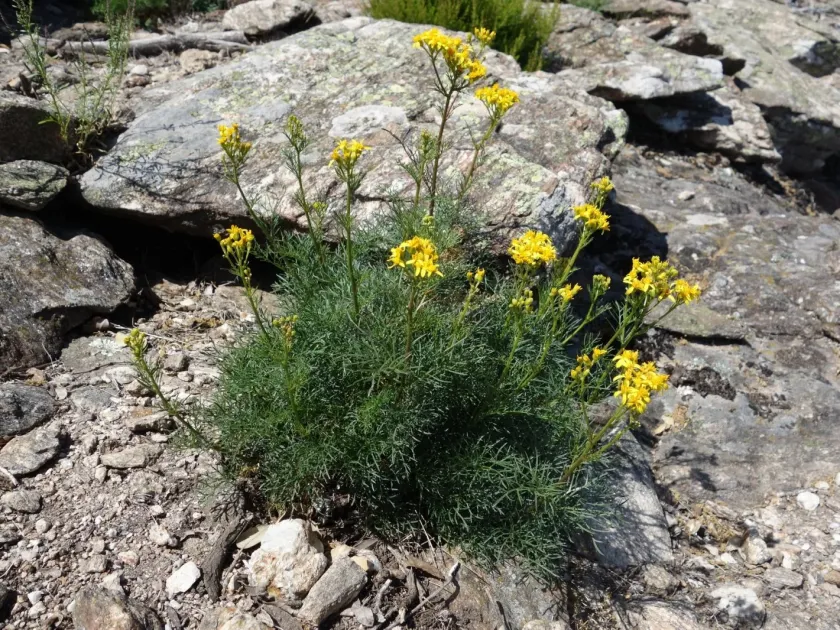
Description
Sowing dates
Jacobaea adonidifolia is a perennial herbaceous plant belonging to the Asteraceae family. While not a primary agricultural commodity, its cultivation requires attention to detail regarding propagation and initial establishment in the field.
Sowing should ideally occur in early spring once the risk of severe ground frost has passed and soil temperatures consistently stay above 10 degrees Celsius. The seeds are small and should be sown shallowly to ensure proper germination under light coverage.
For professional farming, starting seeds in a nursery or greenhouse is recommended. This method ensures uniform growth and allows for the transplanting of healthy seedlings, which are more resilient against environmental stress during the first growth cycle.
Autumn sowing can be practiced in milder climates, as cold stratification during the winter months often improves germination rates the following spring. However, ensure that the sowing depth is adjusted to prevent seeds from being washed away by heavy rains.
When sowing directly into the field, maintain a row spacing of approximately 45 to 60 centimeters. This provides enough space for mechanical maintenance and ensures adequate airflow to prevent the buildup of humidity around the base of the plants.
Growing requirements
This species thrives in sunny locations with full exposure to direct light. Adequate lighting is essential for the plant to reach its physiological maturity and to ensure the proper concentration of active compounds within its leaves and stems.
Soil requirements include well-draining, moderately fertile ground with a neutral pH level. Sandy or silty loams are ideal, as they prevent the stagnation of water which the roots of Jacobaea adonidifolia generally struggle to tolerate.
Watering management is critical during the initial growth stages. While the established plant exhibits moderate drought resistance, regular moisture during the budding and flowering phases is necessary to maximize vegetative biomass production.
The plant is highly hardy and can withstand varying climatic conditions within its native range. However, in regions with very cold winters, applying a layer of organic mulch helps regulate soil temperature and protects the root system from freezing.
Fertilization should be balanced, focusing on promoting healthy foliage growth without excessive lushness. A light application of compost or balanced mineral fertilizer during the spring growth flush is usually sufficient to support plant development throughout the season.
Main diseases and pests
Fungal pathogens such as powdery mildew represent the primary disease risk for Jacobaea adonidifolia, especially in regions with high humidity. Proper field sanitation and spacing are the best ways to mitigate these risks effectively.
Insects like aphids and spider mites can infest the foliage, particularly during dry spells. These pests suck the sap from the plants, which can cause leaf yellowing and reduced vigor, requiring timely inspection and biological intervention.
Root rot is a major threat caused by poor drainage or overwatering. Maintaining soil structure is vital; if the soil is too heavy, adding organic matter or creating raised beds can significantly improve drainage conditions.
Weed management is vital during the plant's first season. Since the plant starts as a low rosette, it can be easily outcompeted by fast-growing weeds; regular cultivation or mulching is necessary to keep the area clear until the plant is established.
Monitoring for signs of pest damage should be a weekly routine. Early detection allows for spot-treatment or physical removal, avoiding the need for heavy chemical applications and protecting the overall health of the crop cycle.