
Jacobaea analoga
Jacobaea analoga
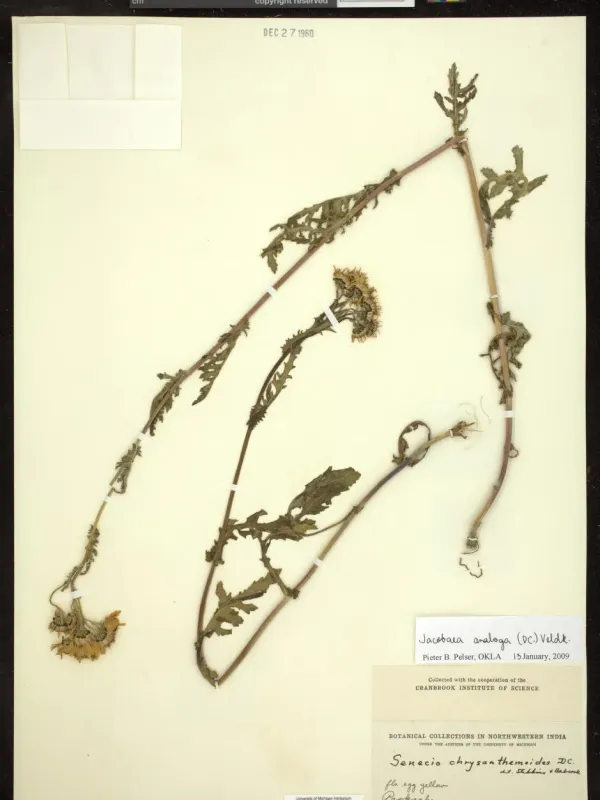
Description
Growing requirements
The plant thrives in temperate, cool climates with distinct seasonal cycles. It prefers areas with good air circulation and protection from extreme, prolonged summer heat which can stress the plant's metabolism.
Soil requirements include well-draining, nutrient-rich substrates with a neutral to slightly acidic pH. Heavy clay soils should be amended with organic matter or grit to improve permeability and prevent root rot.
Consistent moisture is needed during the spring and early summer growing phase, but the soil must never remain saturated for extended periods. Once established, the root system is somewhat tolerant of intermittent dry spells.
Fertilization should be applied conservatively. A light dressing of balanced minerals in early spring is generally sufficient to support vegetative growth without causing excessive, weak stem elongation.
Winter hardiness is a notable trait of the species, allowing it to withstand freezing temperatures provided the ground is sufficiently insulated by natural mulches or snow cover in native settings.
Main diseases and pests
Root and crown rot represent the primary threats to plant health, often exacerbated by high soil moisture levels and poor site drainage. These conditions favor opportunistic fungal pathogens.
Common garden pests such as aphids and spider mites can infest the foliage, particularly during dry weather. Integrated pest management, including periodic monitoring, is advised to minimize potential damage.
Powdery mildew may occur when humidity levels remain high and air circulation is poor. Proper spacing between individual plants is essential to mitigate the risk of fungal outbreaks in dense stands.
Mechanical damage to leaves and stems often serves as an entry point for secondary bacterial infections, necessitating gentle handling during maintenance activities.
Prevention relies on maintaining optimal environmental conditions and removing any necrotic plant tissue promptly to prevent the spread of localized infections.