
Grey ragwort
Jacobaea incana
Description
Growing requirements
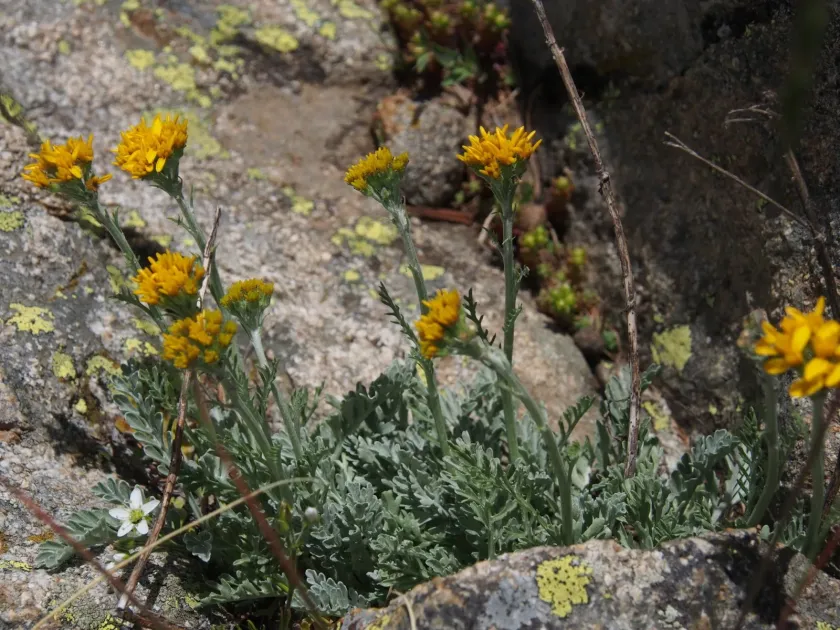
Grey ragwort (Jacobaea incana) is a perennial herbaceous plant belonging to the Asteraceae family. It is a strictly high-altitude species, naturally adapted to the alpine and subalpine zones of European mountain ranges, including the Alps and Pyrenees.
The plant is distinguished by its dense, silvery-grey pubescence covering the leaves and stems. This physical trait is an evolutionary adaptation that reflects sunlight and reduces transpiration, which is crucial for survival in exposed, windy alpine environments.
It prefers rocky, calcareous, or silicate soils with excellent drainage. Unlike many agricultural crops, it does not require fertile soils; in fact, it thrives in nutrient-poor substrates where competition from other fast-growing species is limited.
While not a traditional food or fiber crop, it is of interest in alpine landscaping and slope stabilization projects. Its root structure assists in preventing soil erosion on steep, unstable mountainsides, making it a functional plant in reclamation ecology.
Cultivation requirements involve specific temperature regimes. It demands cool nights and significant diurnal temperature fluctuations typical of mountain climates. It does not tolerate high humidity or waterlogging, which often leads to rapid decay in domestic garden settings.
Main diseases and pests
The primary threats to this plant involve fungal pathogens, particularly root rot, initiated by poor soil drainage. Maintaining a loose, gritty soil profile is essential for the longevity of the plant in any ex-situ cultivation effort.
Pests are generally not a major concern due to the plant's remote, high-altitude habitat. However, in lower regions, generalist herbivores may feed on the foliage if the plant is stressed by heat or drought conditions.