
Jacobaea cannabifolia
Jacobaea cannabifolia
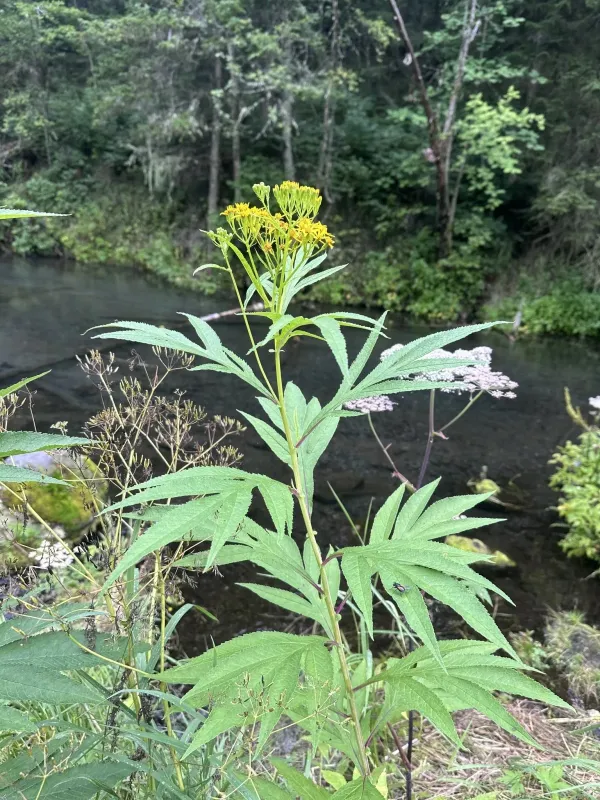
Description
Growing requirements
Jacobaea cannabifolia, commonly known as hemp-leaved ragwort, belongs to the Asteraceae family. It is a robust perennial herb distinguished by its tall, sturdy stalks and distinctively lobed foliage.
The species is native to East Asia, including regions of the Russian Far East and Japan. It typically thrives in high-moisture environments, such as riverbanks, meadows, and moist forest margins.
Agricultural cultivation requires nutrient-dense, loamy soils with excellent water-retention properties. The plant performs best in cool-to-moderate climates and is known for its high level of winter hardiness.
Regarding site selection, it favors sunny locations that provide partial shade during the hottest part of the day. Consistent moisture levels are crucial, especially during the peak development phases of the season.
Economic uses include its utilization in traditional pharmacology and its potential as a structural plant in landscape architecture, particularly for wetland or rain garden restoration projects.
Main diseases and pests
Aphids are the primary insect threat, often colonizing the upper stems and undersides of leaves. Integrated pest management using biological controls is recommended to maintain the plant's medicinal quality.
Powdery mildew represents the most frequent fungal challenge, particularly in areas with stagnant air. Pruning for better air circulation is a simple and effective cultural practice to mitigate this risk.
Root rot can occur if the soil structure becomes too compact or waterlogged for extended periods. Ensuring a well-drained substrate at the time of initial planting is essential for long-term health.
Weed management during the establishment phase is critical, as young plants may struggle to compete with aggressive grasses. Mulching helps retain soil moisture and suppresses weed growth.
Periodic monitoring for signs of stress, such as yellowing leaves or stunted growth, allows for targeted interventions rather than blanket chemical applications.