
Procumbent hypecoum
Hypecoum procumbens
Description
Growing requirements
Procumbent hypecoum (Hypecoum procumbens) belongs to the Papaveraceae family. It is a prostrate annual herb that typically grows in sandy or rocky environments across the Mediterranean region and parts of Asia.
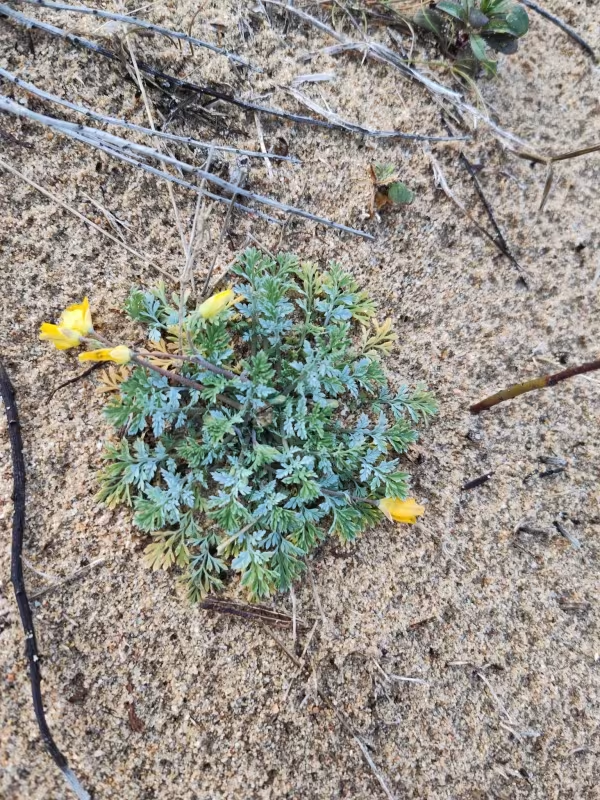
Botanically, the plant is distinguished by its finely dissected, glaucous leaves and small, yellow four-petaled flowers, which are characteristic of its genus.
The climate requirements for this plant are centered on high light intensity and low to moderate rainfall. It thrives in open habitats where competition from taller vegetation is minimal.
Soil conditions are critical for its success. The plant demands well-drained substrates, ideally sand or gravelly loam, as it cannot survive in heavy or waterlogged soils.
Agronomically, Hypecoum procumbens is rarely cultivated as a commercial crop. It is mostly recognized for its medicinal potential due to specific alkaloids, but it is also viewed as a weed in arable field systems.
Main diseases and pests
The plant is relatively resilient against common garden and field pests. This natural resistance is often attributed to the high concentration of bioactive compounds within its tissues.
The primary threat to its survival in agricultural settings is soil pathogens such as Pythium or Rhizoctonia, which thrive in poorly drained environments.
High humidity and stagnant air are significant threats, as they promote fungal infections on the foliage, eventually leading to plant death in small populations.
Biological competition is perhaps the biggest threat to this species. Being a low-growing plant, it is easily shaded out by faster-growing, nitrogen-loving weeds in agricultural fields.
Effective management strategies usually involve the prevention of water logging and manual removal from fields to ensure that the species does not interfere with primary crop development.