
Hypecoum littorale
Hypecoum littorale
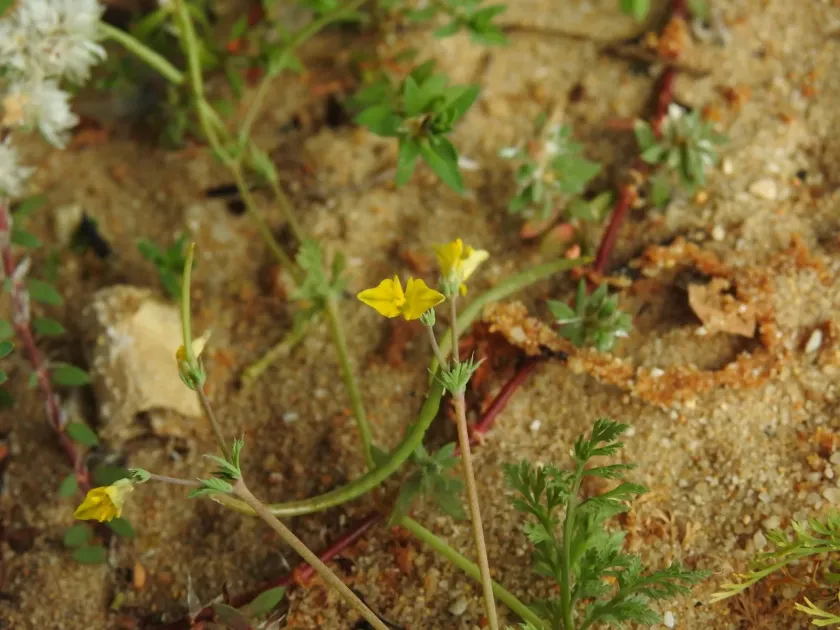
Description
Growing requirements
Hypecoum littorale is an annual herbaceous plant belonging to the Papaveraceae (poppy) family. It naturally inhabits coastal regions, specifically sandy dunes, which defines its inherent tolerance to saline conditions and poor nutrient availability in the substrate.
Botanically, the plant is characterized by a basal rosette of finely divided leaves and small, delicate yellow flowers. The growth habit is typically prostrate or ascending, with stems reaching heights of up to 30 centimeters, which allows it to thrive in high-wind, open-air coastal environments.
The crop requires well-drained, sandy soils that allow for rapid drainage. It is highly adapted to low-fertility soils and generally does not perform well in heavy, nutrient-rich clay soils, which tend to encourage pathogen growth and root rot.
Solar exposure is a critical factor for successful cultivation. Hypecoum littorale is an obligate heliophyte, meaning it requires full, unobstructed sunlight throughout its growth cycle to ensure optimal biomass production and development of secondary metabolites.
In terms of agricultural management, this crop requires very little irrigation. Its deep taproot system is designed for accessing sub-surface moisture in arid sand dunes, making it an excellent candidate for low-input agricultural systems and landscape stabilization projects.
Main diseases and pests
The primary threats to Hypecoum littorale are related to soil-borne fungal pathogens. Stagnant moisture and high humidity around the root crown can quickly lead to damping-off, especially in the seedling stage, if soil drainage is not managed correctly.
Pests are generally limited, but occasionally aphids or root-feeding larvae can cause damage. Monitoring is essential during the flowering stage, though chemical control should be minimized to preserve the purity of the plant material for potential pharmaceutical use.
Weed competition is significant, particularly during the early developmental stages of the plant. Because Hypecoum is a slow-growing species initially, it can easily be outcompeted by more aggressive ruderal species, requiring timely weeding operations.
Soil acidification should be strictly avoided, as it adversely affects the plant's physiological processes. Monitoring pH levels is essential, as the species is accustomed to neutral or slightly alkaline sandy environments common near coastal areas.
By implementing proper spatial distribution and avoiding monoculture practices in soil prone to pathogen buildup, the overall health and yield stability of the crop can be maintained without significant reliance on synthetic pesticides.