
Hibiscus paramutabilis x syriacus hybrids
Hybrids between Hibiscus paramutabilis and Hibiscus syriacus
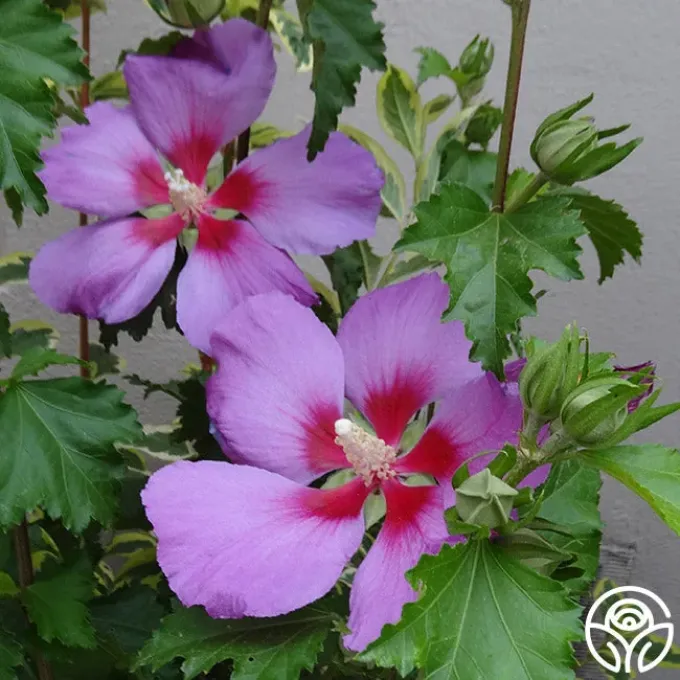
Description
Growing requirements
These hybrid forms represent a significant advancement within the Malvaceae family, combining the winter hardiness of Hibiscus syriacus with the larger, more dramatic floral display of Hibiscus paramutabilis.
Cultivation requires full sun exposure to maximize flower production. While they are relatively adaptable, the ideal location is a spot sheltered from strong prevailing winds that could damage the large blooms.
The soil must be well-draining, fertile, and slightly acidic to neutral in pH. Amending heavy soils with organic matter is highly recommended to improve structure and moisture retention without risking waterlogging.
Consistent watering during the growing season is necessary, particularly during heatwaves. Mulching around the base of the plant helps to maintain soil moisture and protects the root system from temperature fluctuations.
Fertilization with a balanced slow-release fertilizer in early spring supports healthy vegetative growth and abundant flowering throughout the late summer and early autumn months.
Main diseases and pests
Common horticultural threats include fungal diseases such as leaf spot and Botrytis, particularly in humid or overcrowded garden environments where airflow is insufficient.
Pests like aphids and spider mites can infest the foliage, particularly during dry spells. Infestations can lead to distorted leaf growth and reduced plant vigor if left unchecked.
Integrated pest management, including regular monitoring and the use of horticultural soaps or systemic insecticides, is effective in controlling outbreaks.
Sanitation practices, such as removing fallen leaves at the end of the season, are essential to reduce the overwintering population of pathogens.
Pruning should be performed in late winter or early spring to remove dead wood and encourage new growth, which helps in maintaining a balanced and healthy shrub structure.