
Camellia azalea and Camellia japonica hybrids
hybrids between Camellia azalea C. F. Wei and Camellia japonica L.
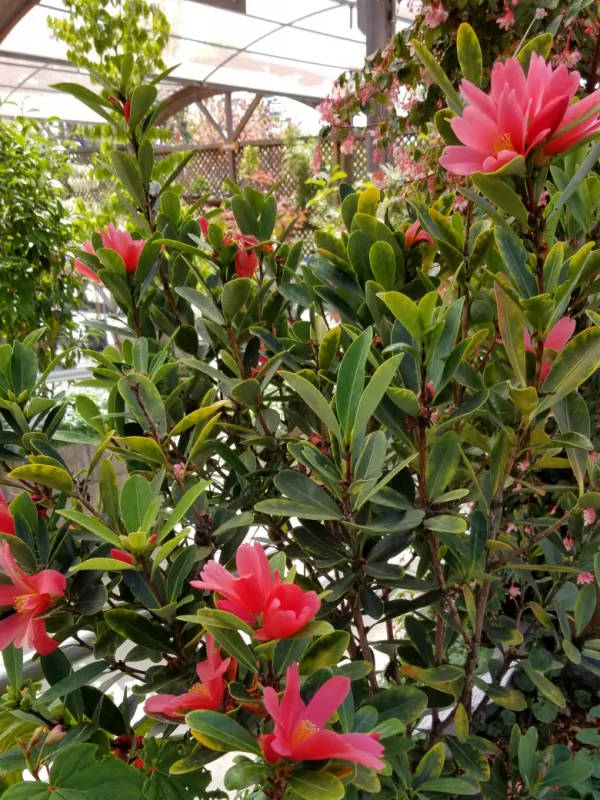
Description
Growing requirements
Hybrids between Camellia azalea and Camellia japonica are exquisite ornamental plants belonging to the Theaceae family. They are bred to combine the heat tolerance and continuous blooming habit of C. azalea with the hardiness and classic flower form of C. japonica.
These plants thrive in acidic, well-draining soil rich in organic matter. A pH range between 5.5 and 6.5 is essential to prevent nutrient deficiencies, particularly iron chlorosis, which is common in alkaline conditions.
Partial shade is the optimal environmental setting for these hybrids. They require protection from intense afternoon sunlight, which can scorch the glossy leaves and desiccate the developing flower buds during the summer heat.
Consistent moisture levels must be maintained throughout the growing season. While they need regular watering, the soil must never be waterlogged, as poor aeration leads to root rot and fungal colonization.
Mulching the base with pine bark or needles helps retain soil moisture, suppress weeds, and slowly increase soil acidity over time, mimicking the natural forest-floor conditions of their native habitat.
Main diseases and pests
Fungal leaf spot diseases are among the most prevalent threats. These are usually triggered by high humidity, poor air circulation, and overhead irrigation, requiring a shift to drip irrigation methods.
Scale insects are major pests that attach to stems and undersides of leaves. They weaken the plant by extracting sap and producing honeydew, which serves as a substrate for sooty mold growth.
Root rot caused by Phytophthora species is a critical threat. It often manifests as sudden wilting and discoloration of the foliage, and if not caught early, it can lead to total plant loss.
Spider mites pose a significant risk during dry, warm periods. Infestations are characterized by fine webbing and stippling on the foliage, which can eventually lead to leaf drop and stunted growth.
Effective management includes maintaining vigorous plant health through balanced fertilization and promptly removing any infected plant tissues to prevent the spread of pathogens throughout the nursery or garden.