
Sasanqua camellia
Camellia sasanqua Thunb.
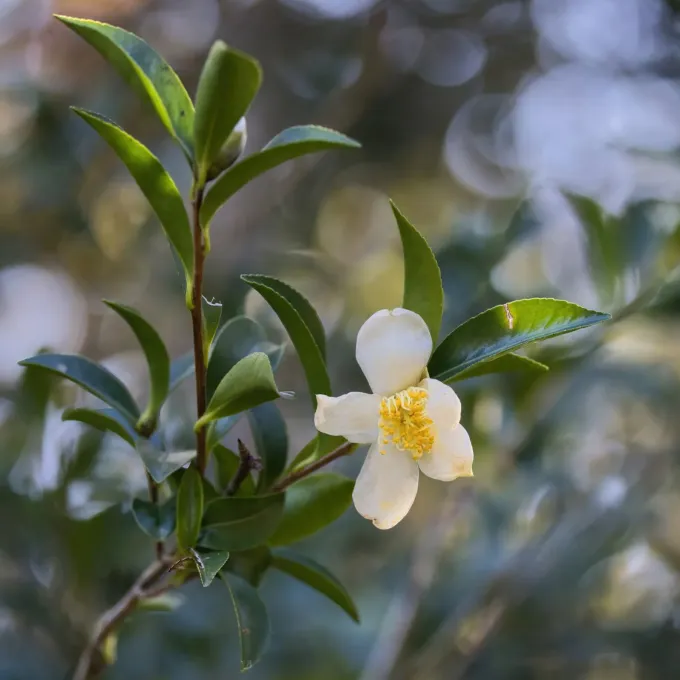
Description
Growing requirements
Sasanqua camellia (Camellia sasanqua) is an evergreen woody plant belonging to the Theaceae family. Unlike other species, this plant is valued for its remarkable autumn and early winter bloom, making it a key element in seasonal garden design.
Native to the evergreen forests of Japan and China, the species thrives in well-drained, acidic, and organic-rich soils. It requires consistent soil moisture but cannot tolerate waterlogging, which often leads to root decay and nutrient uptake issues.
The cultural requirements demand a location with partial shade to filtered sunlight. While it can tolerate more exposure than its relatives, protection from intense midday heat and harsh winter winds is essential for maintaining deep green foliage.
Temperature management is critical for productivity. While it shows some cold tolerance, temperatures dropping consistently below -10°C require protective measures such as mulching or covering to prevent damage to the terminal buds.
Beyond its ornamental value, the plant is economically significant due to its seeds. The extracted oil is highly prized in high-end cosmetic formulations and the food industry, known for its oxidative stability and beneficial fatty acid profile.
Main diseases and pests
Pathogenic fungi, particularly Phytophthora cinnamomi, pose the most significant threat to the root system, usually triggered by poor drainage and excessive moisture levels within the root zone.
Pests like tea scale are notorious for colonizing the undersides of leaves. These infestations can lead to leaf yellowing and stunted growth if left unmanaged during the early phases of development.
Aphids and spider mites are also common threats, especially in protected or greenhouse environments. These pests disrupt the plant's physiological functions by feeding on phloem sap and foliage cells.
To mitigate risks, growers must prioritize good horticultural practices, such as proper spacing to facilitate air movement and avoiding overhead irrigation that leaves foliage wet for extended periods.
Integrated pest management (IPM) protocols, including the application of horticultural oils and systemic fungicides, are necessary for maintaining large-scale plantation health and ensuring high quality of the final seed harvest.