
Golden Camellia
Camellia chrysantha (Hu) Tuyama
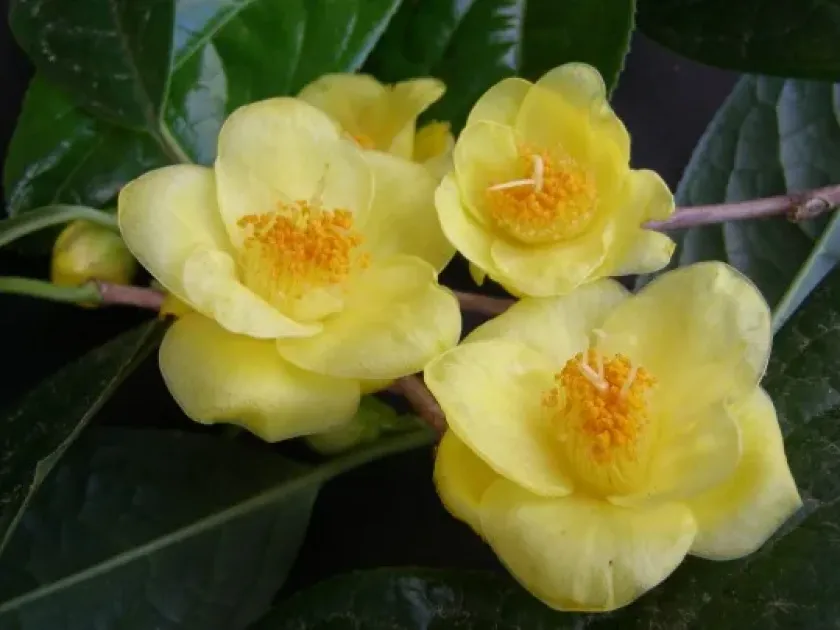
Description
Growing requirements
Golden Camellia (Camellia chrysantha) belongs to the Theaceae family. Originating from the humid subtropical regions of Southern China and Vietnam, this evergreen shrub naturally thrives in shaded forest understories near water sources.
The plant is highly demanding regarding environmental conditions. It thrives in temperatures between 18°C and 25°C and requires high air humidity levels to prevent the edges of its glossy, deep green leaves from drying out.
A well-draining, acidic soil with a pH ranging from 5.0 to 6.5 is essential. Because it is highly sensitive to root rot, the planting medium must be airy and rich in organic matter to prevent waterlogging.
While it is a shade-loving species, it requires diffused light to maintain healthy growth. Direct intense sunlight can damage the leaves, often causing chlorosis or necrotic spotting on the foliage.
Agronomic management in controlled environments involves regular misting and watering with soft, non-alkaline water. It is vital to replicate the high-humidity, sheltered microclimate of its natural habitat for successful cultivation.
Yield
The primary economic value of Camellia chrysantha lies in its flowers, which are widely sought after for their unique medicinal properties. The petals are used in the production of high-end herbal teas and health supplements.
The plant contains a significant profile of bioactive compounds, including flavonoids, saponins, and polysaccharides, which provide it with strong antioxidant and anti-inflammatory qualities.
Commercial yields typically reach maturity 5 to 7 years after initial planting. Strategic pruning techniques are employed to encourage the development of lateral shoots, which effectively increases the number of flower buds produced annually.
Harvesting is labor-intensive as it must be performed manually to ensure the integrity of the flower buds. Consistent nutrient management and hydration are crucial for maintaining sustainable yields over several decades.
Modern extraction methods allow the industry to utilize both leaves and flowers, further increasing the total output of the plantation and the diversification of processed botanical products.
Main diseases and pests
The most common threats to Golden Camellia include fungal diseases such as anthracnose and powdery mildew, which thrive in stagnant air or environments with excessively high moisture levels.
Scale insects, spider mites, and aphids are the most persistent pests. These organisms target the undersides of the leaves and tender new shoots, significantly weakening the plant if not addressed early.
Integrated pest management (IPM) is strongly recommended. This includes the use of predatory beneficial insects and targeted biological agents to minimize chemical residue on the final crop.
Regular sanitation of the growing area is essential. Removing fallen leaves and infected branches helps to prevent the spread of fungal pathogens throughout the planting site.
- Maintain proper spacing between plants for airflow.
- Monitor for early signs of pest infestation.
- Sterilize all pruning equipment to prevent cross-contamination.
Harvesting
Harvesting is performed during the early morning hours, specifically when flower buds are partially open. This timing is critical to preserve the concentration of delicate essential oils and chemical compounds.
Once gathered, the flowers undergo a controlled dehydration process. Low-temperature drying is necessary to preserve the unique golden hue and prevent the degradation of thermolabile medicinal components.
Leaves are also harvested for the production of specialized teas. This process follows traditional tea-making stages, including wilting and controlled oxidation, to enhance flavor profiles.
Post-harvest care involves a final fertilization cycle to provide the plants with the energy needed to recover from the stress of harvesting and to prepare them for the next vegetative growth phase.
Finished products are stored in airtight, light-protected packaging to prevent oxidation, ensuring that the tea or medicinal material retains its potency and aesthetic quality for consumers.