
Salween camellia
Camellia saluenensis Stapf ex Bean
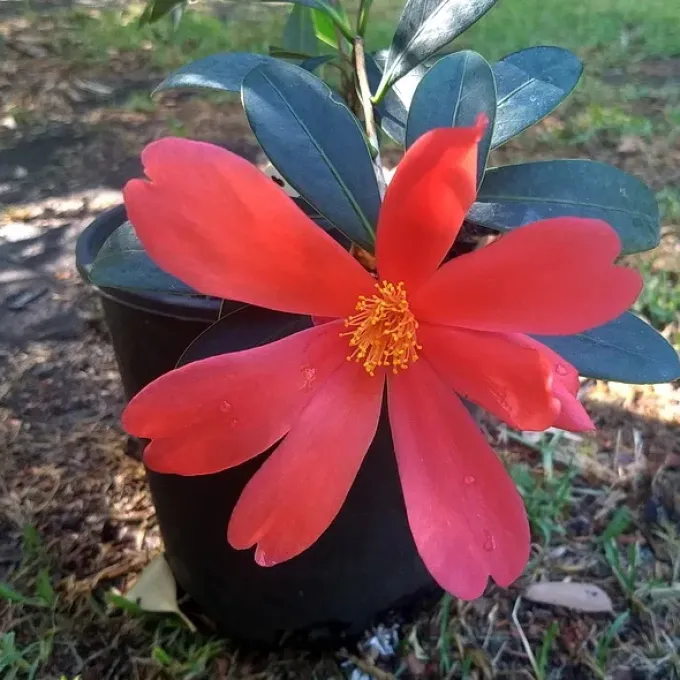
Description
Growing requirements
Camellia saluenensis, commonly known as the Salween camellia, is an evergreen shrub native to the mountainous regions of Yunnan, China. Belonging to the Theaceae family, it is highly regarded for its hardiness and serves as a vital genetic source for many modern hybrid camellias.
The plant thrives in acidic, humus-rich soil that provides excellent drainage. It is highly sensitive to waterlogged conditions, which can quickly lead to root decay. Incorporating pine needles or peat into the planting hole helps maintain the necessary low pH levels.
Regarding light, this species prefers semi-shaded environments. While it can tolerate some morning sun, intense afternoon heat can scorch the glossy foliage. A location with dappled shade, such as under the canopy of larger deciduous trees, is considered optimal for development.
Climate requirements include protection from desiccating winds, which can damage the leaves during winter months. Although it is more frost-tolerant than other Camellia species, providing a sheltered microclimate remains crucial for plants in exposed gardens.
Routine care involves consistent moisture management, particularly during the growing season. It is essential to avoid hard water, as calcium buildup will neutralize soil acidity and eventually cause nutrient deficiencies, manifesting as yellowing leaf veins.
Main diseases and pests
Root rot, primarily caused by the water mold Phytophthora, represents a major threat to the Salween camellia. It is often triggered by poor site selection where water accumulates near the base of the shrub.
Fungal leaf spot diseases are common in humid environments with poor air circulation. These diseases appear as brown or black lesions and, if left untreated, can result in significant defoliation and weakened plant vitality.
Pests such as scale insects and mealybugs are persistent problems that hide in the crevices of stems and leaf axils. They weaken the plant by extracting plant sap and promoting the growth of sooty mold on the foliage.
Spider mites are another frequent pest that thrives in hot, dry conditions. An infestation typically results in stippling on the upper leaf surfaces and a fine webbing, which significantly detracts from the shrub's aesthetic appeal.
Effective management includes integrated pest control strategies: monitoring regularly for early signs of infection, ensuring proper spacing between plants to maximize airflow, and applying horticultural oils when necessary.