
Williams Camellia
Camellia x williamsii W. W. Sm.
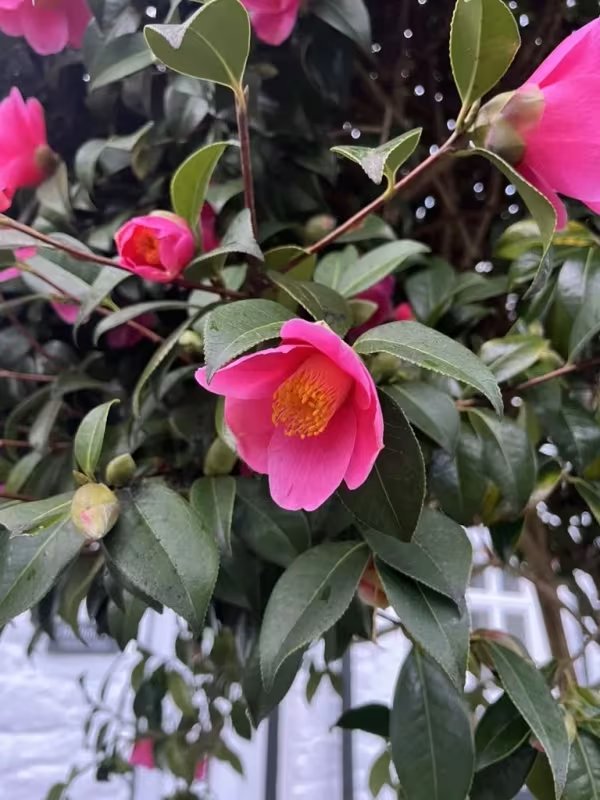
Description
Growing requirements
Williams Camellia (Camellia x williamsii) is a prominent hybrid derived from the cross-breeding of Camellia japonica and Camellia saluensis. Belonging to the Theaceae family, it is highly valued for its ability to bloom profusely in cooler climates.
This species thrives in acidic soils with a pH range of 5.0 to 6.0. It is essential to ensure that the planting medium is rich in organic matter and provides excellent drainage to prevent root asphyxiation during the wet season.
The plant prefers partial shade, especially in regions with strong afternoon sun. Excessive light intensity can cause yellowing of the leaves and damage to the flower buds, while deep shade may significantly reduce the density of the flowering display.
Climatic adaptability is one of the key features of this hybrid. It is generally more resilient to late spring frosts compared to other camellia varieties, making it a reliable choice for gardens in temperate zones.
Watering management requires the use of non-calcareous water. Regular irrigation is necessary to keep the soil consistently moist but never waterlogged, ensuring the plant maintains its evergreen foliage throughout the year.
Main diseases and pests
Root rot is a critical threat that often manifests in poorly drained soils. Once the root system begins to decay, the entire plant structure becomes vulnerable to secondary fungal infections.
Camellia petal blight is a specific fungal issue that affects the aesthetic quality of the blooms, causing them to turn brown and rot prematurely during the flowering season.
Scale insects are common pests that attach to stems and leaves. They cause stunted growth and yellowing by extracting sap, requiring localized treatments with horticultural oils.
Spider mites can become a major nuisance in dry, warm environments. These pests thrive on the underside of leaves, causing a stippled appearance and eventually leaf drop if left unchecked.
Integrated pest management, including regular sanitation and early detection, is the most effective approach to preserving the health and vigor of a Williams Camellia plantation.