
Reticulated camellia
Camellia reticulata Lindl.
Description
Growing requirements
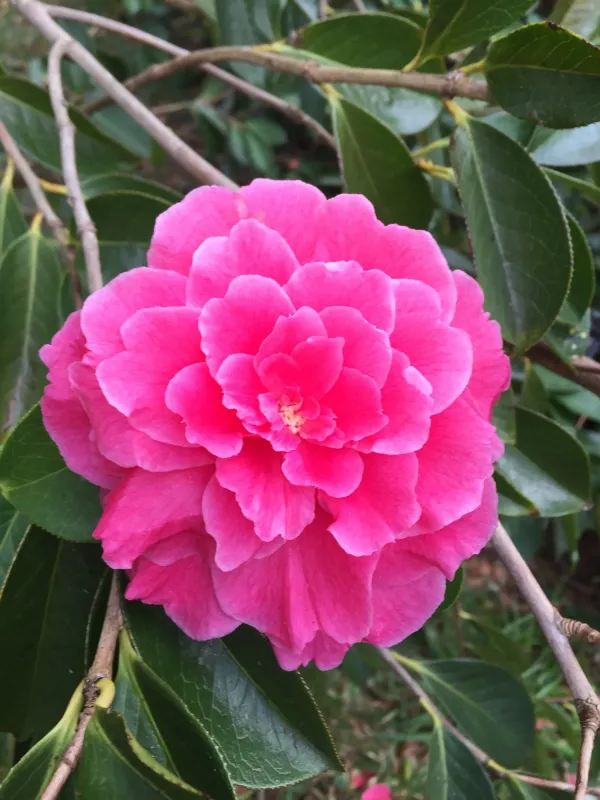
Reticulated camellia belongs to the Theaceae family. It is a large evergreen shrub or small tree native to the Yunnan province of China, known for having the largest flowers in the genus.
The species prefers semi-shaded environments with protection from scorching afternoon sun. It thrives in locations where the air is moist and the temperatures are moderate throughout the year.
Soil requirements are strict: the plant needs well-draining, humus-rich soil that is acidic. Any alkalinity in the substrate will lead to chlorosis and stunted growth.
Climate conditions should be subtropical, as this species is less cold-hardy than its common relatives. Protection from frost is mandatory in regions where temperatures drop below freezing.
Annual growth involves careful irrigation with rainwater or demineralized water. Fertilizer should be applied during the early spring to promote healthy foliage and abundant blooming.
Main diseases and pests
The main pathological threats include Phytophthora root rot, which is common in poorly drained soils. This disease can be fatal if the moisture levels are not managed correctly.
Leaf spot diseases caused by various fungal pathogens often affect the plant during humid, stagnant periods. Proper spacing and airflow are crucial to minimize these risks.
Scale insects are the most persistent pests found on Camellia reticulata. They hide under the leaves and on stems, making them difficult to detect until the infestation becomes heavy.
Aphids and mites can also become a problem during the spring flush. Regular monitoring of the growing tips is advised to prevent significant damage to the foliage.
Integrated pest management, including horticultural oils for scales and appropriate fungicides for rot control, is the standard approach for maintaining plant health.