
Hyacinthoides mauritanica
Hyacinthoides mauritanica
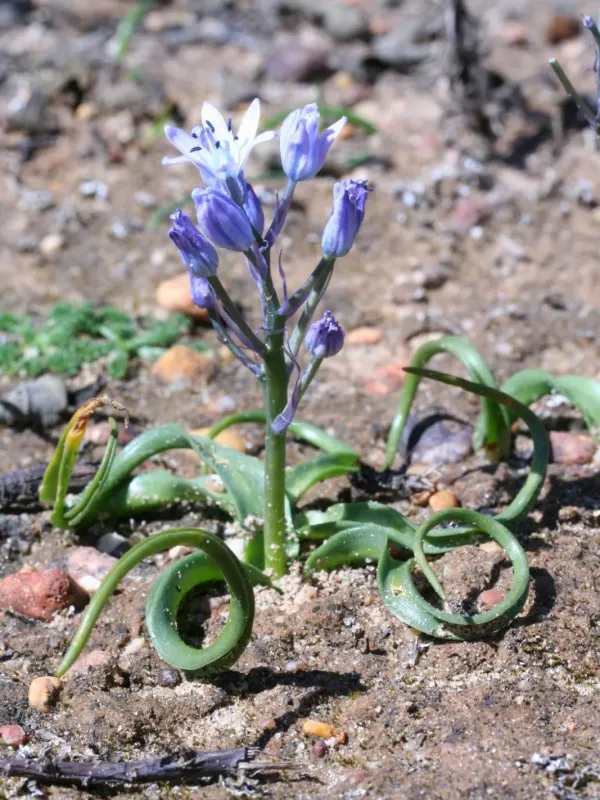
Description
Growing requirements
Hyacinthoides mauritanica is a perennial bulbous plant belonging to the Asparagaceae family. Native to the Iberian Peninsula, this plant has adapted to Mediterranean conditions, typically found in open meadows and woodland edges throughout Spain and Portugal.
The plant thrives in well-drained, fertile soils with a neutral pH. It requires a sunny to semi-shaded environment to flourish. Proper soil structure is essential, as the bulbs are susceptible to rotting if planted in heavy, waterlogged clay soils during their dormant period.
Climatically, it prefers regions with cool, wet winters and warm, dry springs. As an ephemeral, it completes its growth cycle quickly before the onset of summer drought, making it an excellent choice for gardens with Mediterranean-like seasonal patterns.
Botanically, Hyacinthoides mauritanica features a basal rosette of leaves and a raceme of pendulous, bell-shaped flowers. The inflorescence usually bears blue to violet-colored flowers, which are highly valued for their early spring display in home gardens and landscape designs.
Its primary use is ornamental, often utilized in rock gardens, woodland plantings, or as part of naturalistic border displays. Its ability to naturalize in suitable habitats makes it a low-maintenance favorite for gardeners looking to provide early-season color.
Main diseases and pests
The most significant threats to the species are fungal diseases, particularly Botrytis and various bulb rots caused by excessive moisture. Ensuring good air circulation and adequate soil drainage is the primary defense strategy for health management.
Pests such as bulb mites and slugs can pose a challenge. Slugs are particularly problematic during the early emergence of foliage in moist springs. In areas with high populations of rodents, bulb protection might be necessary to prevent digging during the winter dormancy.