
Hibiscus panduriformis
Hibiscus panduriformis Burm. f.
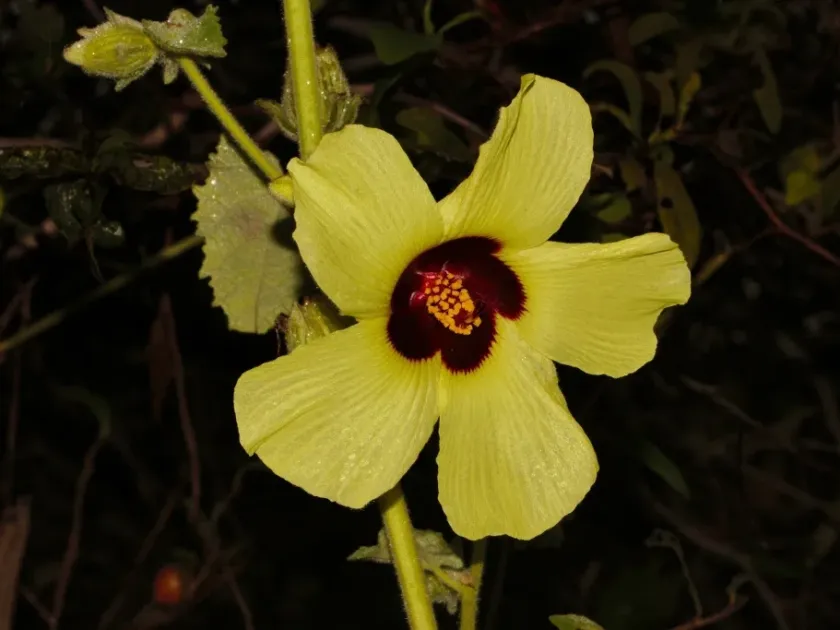
Description
Sowing dates
Hibiscus panduriformis is a thermophilic plant that requires stable soil temperatures of at least 18-20°C for successful germination and initial growth.
The optimal planting time is late spring, ensuring that all risks of cold snaps or frost have completely passed to avoid early-stage seedling loss.
Sowing is typically performed using drill seeding, which provides uniform spacing and facilitates mechanical weeding throughout the growing season.
Seeds are sown at a depth of 2 to 3 centimeters, a range that supports rapid emergence while maintaining sufficient moisture access in the root zone.
Regular monitoring of moisture levels after sowing is essential to ensure a high germination rate and strong, uniform stands across the field.
Growing requirements
As a member of the Malvaceae family, this crop demands significant solar exposure to maximize biomass production and stem elongation.
The plant thrives in well-drained, fertile soils that prevent waterlogging, which is critical as stagnant moisture can cause severe root diseases.
Hibiscus panduriformis is notably resilient in arid environments, a trait inherited from its native distribution in tropical Africa and Asia.
High nutrient requirements during the vegetative growth phase necessitate balanced fertilizer applications to support the development of structural fibers.
Optimal growth occurs at temperatures between 25°C and 30°C; ambient temperatures dropping below 15°C will significantly retard the plant's metabolic rate.
Yield
The total yield of stem biomass is highly dependent on planting density and the quality of field management provided during the active growth stages.
In industrial agriculture, yield is measured by the quality and weight of the extracted bast fiber, which reaches its peak at specific growth phases.
The plant serves as a promising source of natural bast fiber, which is valued for its potential applications in textile and technical fabric production.
Beyond fiber, the seeds of the plant contain oil that may be extracted for industrial purposes, adding secondary value to the harvest.
Achieving stable yields requires intensive cultivation techniques, particularly in maximizing the uniformity of the plant canopy across the field.
Main diseases and pests
Young plants are susceptible to soil-borne pests and root rots that are exacerbated by poorly drained conditions or excessive soil moisture.
Foliage is frequently targeted by sap-sucking insects such as aphids and spider mites, which thrive in hot, dry climatic conditions.
Fungal pathogens like powdery mildew can appear in overly dense stands, as poor air circulation increases humidity levels around the stems.
Integrated pest management strategies, including regular scouting and authorized treatments, are necessary to mitigate yield losses from biotic stressors.
Weed competition during the early stages of development is a major yield-limiting factor, necessitating early mechanical or chemical intervention.
Harvesting
Harvesting should ideally begin during the early flowering phase, as this is when the stems contain the highest concentration of high-quality fiber.
The process involves mechanized mowing followed by primary processing to effectively separate the bast fibers from the woody core of the stems.
Avoiding delayed harvesting is critical, as allowing the plants to mature too long results in coarser, less flexible fiber that is difficult to process.
After cutting, the biomass must be dried properly to prevent microbial degradation and to maintain the integrity of the fiber structure.
Mechanization of the harvest is essential for the economic viability of growing this crop on a commercial, industrial scale.