
Blue mahoe
Hibiscus elatus Sw.
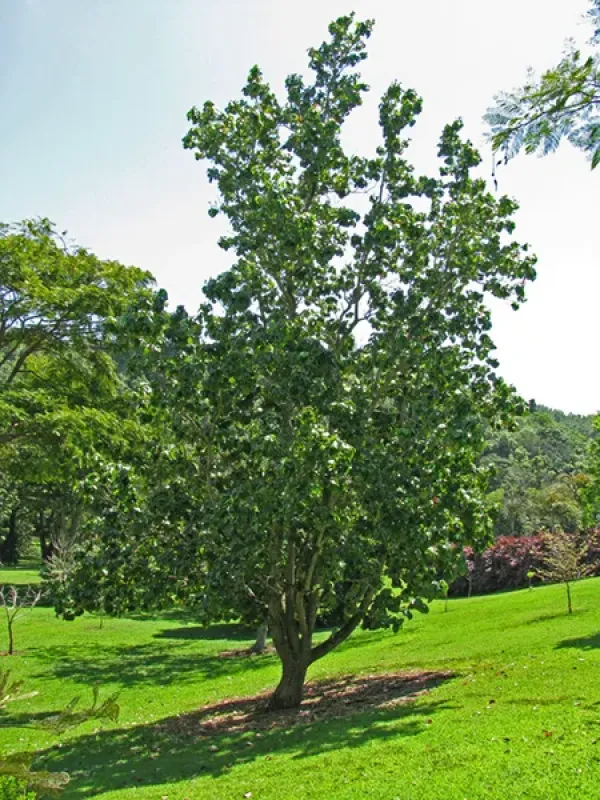
Description
Sowing dates
The propagation of Hibiscus elatus in commercial operations is typically achieved through seeds or cuttings within controlled nursery environments. Seeds should be sown in a well-drained medium immediately after harvest, as their viability decreases rapidly over time.
The optimal time for sowing is at the beginning of the rainy season, ensuring the young seedlings receive adequate natural hydration. A stable temperature range of 22-25 degrees Celsius is critical for consistent germination rates.
Pre-treatment of seeds, such as light scarification, is recommended to speed up the swelling of the seed coat. The sowing depth should be shallow, generally 1-2 centimeters, to allow the seedling to emerge easily without energy exhaustion.
Cuttings are used for vegetative propagation to maintain the desirable phenotypic characteristics of superior mother trees. These cuttings are placed in a sandy-peat mix with a misting system to maintain the high humidity required for root development.
Seedlings are ready for transplanting into permanent forest sites when they reach a height of 30-50 centimeters, which usually occurs 6 to 8 months after the initial sowing.
Growing requirements
Hibiscus elatus, a member of the Malvaceae family, is a large evergreen tree that can reach heights of up to 25 meters in its native habitat. It thrives in deep, fertile, and well-drained soils with a neutral or slightly acidic pH level.
As a strictly tropical species, it requires consistently warm temperatures and high humidity for optimal growth. While mature trees possess a degree of drought tolerance, consistent moisture is necessary to ensure the production of high-quality timber.
The plant requires full sun exposure for the best growth rates, although juvenile trees can tolerate partial shade. Protecting plantations from high winds is essential to prevent root damage and stem deformation.
Agro-management includes the application of nitrogen-rich fertilizers during the early growth stages to encourage the development of a strong, straight trunk. Thinning the stand is necessary to maintain proper airflow and light penetration.
Due to its rapid growth rate, regular pruning of lower branches is vital in commercial plantations. This practice helps to form a clean, knot-free trunk, which is highly valued in the timber market.
Yield
The primary economic output of Hibiscus elatus is its prized timber, commercially known as Blue Mahoe. This wood is highly sought after for its unique gray-blue or variegated color and excellent mechanical properties.
Harvesting maturity is typically reached between 20 and 30 years after planting, depending on management intensity. Under ideal conditions, the tree can exhibit annual height increments exceeding one meter.
The timber is celebrated in the furniture industry for its durability, flexibility, and ease of machining. It is commonly used for luxury cabinetry, high-end musical instruments, and decorative trim.
Beyond timber, the fibrous inner bark is harvested for the production of strong ropes and cordage. Furthermore, the tree acts as a significant honey source, supporting local beekeeping efforts near plantation sites.
In agroforestry systems, the tree is appreciated for its ability to restore soil fertility, as its leaf litter is rich in organic matter, facilitating nutrient recycling.
Main diseases and pests
Primary pests for Hibiscus elatus include lepidopteran larvae that feed on young foliage, which can significantly retard growth in nursery stages. Regular field monitoring is essential to catch outbreaks before they cause widespread damage.
Fungal pathogens, particularly root rot, are significant risks in poorly drained soils or during periods of excessive rainfall. Implementing robust drainage systems is the most effective preventative measure.
Scale insects and mealybugs can infest stems and branches, extracting sap and weakening the tree's vigor. Strategic applications of targeted insecticides may be necessary during severe infestation years.
Epiphytic plants often colonize the dense crowns of mature trees, potentially blocking sunlight and adding excessive weight to branches. Periodic removal of these epiphytes is a standard maintenance practice.
Climate-related stressors, such as unexpected cold snaps, can cause tissue necrosis, emphasizing the importance of selecting sites with stable, sheltered microclimates for new plantations.
Harvesting
The harvesting process involves selective logging of trees that have reached the target diameter. It is best conducted during the dry season to minimize soil compaction and facilitate easier transportation of logs from the site.
Primary log processing, including debarking and cross-cutting, should be performed promptly to prevent end-checking and fungal staining. Proper air-drying techniques are required to preserve the unique blue pigments of the timber.
Fiber extraction from the bark occurs during periods of active sap flow, when the bark layers separate easily from the woody stem. The harvested fiber is then cleaned and washed in water to prepare it for commercial use.
Post-harvest management involves clearing the site of brush, which is then recycled into the soil as organic mulch to support future growth. Reforestation of harvested blocks is standard practice.
The inventory and grading of the harvested timber are based on grain pattern quality and wood color consistency, which are the primary determinants of the final market price.