
Red Hibiscus
Hibiscus coccineus x Hibiscus moscheutos L.
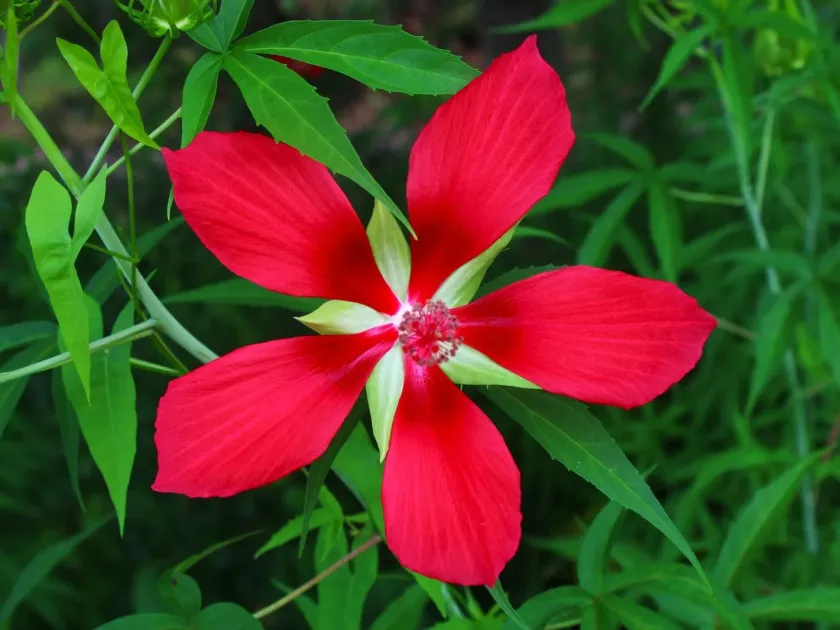
Description
Sowing dates
Sowing seeds of the red hibiscus (Hibiscus coccineus x H. moscheutos) is mainly carried out in late winter or early spring, approximately 8-10 weeks before the end of the frost period. The optimal method is starting seeds indoors in a controlled environment.
Germination of the seeds requires a substrate temperature in the range of 22–25°C. It is essential to maintain stable soil moisture, avoiding both drying out and waterlogging, which can trigger the development of pathogens.
Seedling pricking should be performed after the appearance of two true leaves. Plants require sufficient light to form a strong root system, so supplementary lighting with phytolamps is recommended if natural light is insufficient.
Transplanting hardened seedlings to open ground should only occur after warm weather is fully established and the soil temperature at a depth of 10 cm reaches at least 15°C.
When propagating by seed, it is important to note that hybrid forms may not fully retain the phenotypic traits of the parent plant, therefore, division of the root clump is often used to maintain the purity of the cultivar.
Growing requirements
Red hibiscus belongs to the Malvaceae family and is a vigorous herbaceous perennial. The plant prefers sunny locations protected from strong winds, where it can maximize its ornamental potential and flowering capacity.
Soil requirements include high moisture retention and fertility. The crop develops best in loamy soils with a neutral or slightly acidic pH, rich in organic matter, which provides essential nutrients during the vegetation period.
Agrotechnical management includes regular and abundant watering, as hibiscus is extremely sensitive to moisture deficits. During hot spells, intense transpiration necessitates maintaining constant soil moisture.
For intensive growth, the plant requires balanced complex mineral fertilizers. Feeding starts during the active vegetative growth phase and continues until the onset of flowering, with nitrogen content reduced towards the autumn.
Climate requirements include a warm summer for proper shoot maturation. In regions with severe winters, the above-ground part of the plant dies off, requiring mulching of the root zone to protect against freezing temperatures.
Main diseases and pests
Among pests, aphids and spider mites represent the greatest danger to the hibiscus. These insects reproduce actively in hot and dry weather, damaging leaves and buds, which leads to significant deformation of the plant.
Thrips and whiteflies can also infest plantings, especially in greenhouse conditions or where planting density is high. Regular inspection of the underside of leaves allows for early detection of pest colonies.
Among fungal diseases, leaf rust and root rot are the most common, occurring due to improper watering regimes or poor soil aeration.
Disease prevention involves maintaining proper spacing between plants, ensuring high-quality drainage of the site, and timely removal of plant debris where fungal spores might overwinter.
In cases of critical infestation, the use of systemic insecticides and fungicides is recommended, strictly following the application instructions for the specific growth phase of the crop.