
Hibbertia serpyllifolia
Hibbertia serpyllifolia
Description
Growing requirements
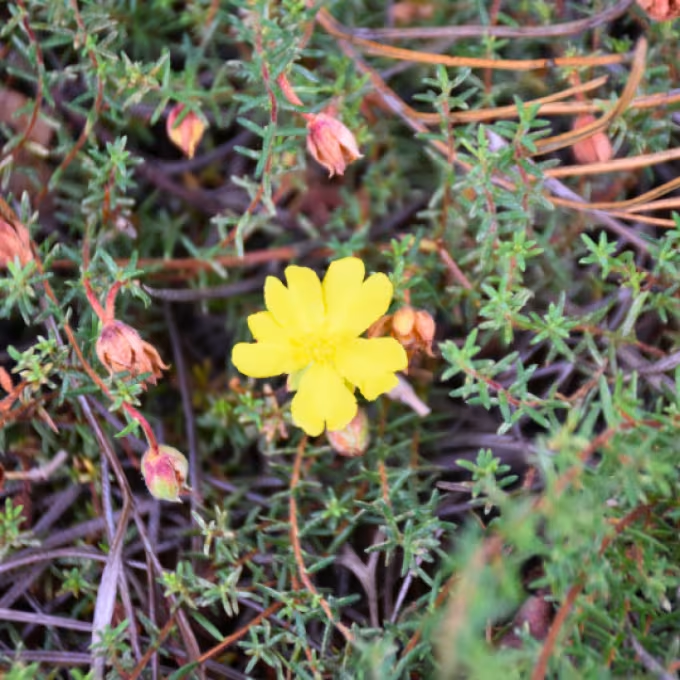
Hibbertia serpyllifolia is a perennial evergreen shrub belonging to the Dilleniaceae family. Characterized by its compact growth habit and vibrant flowers, this species is highly valued in horticulture for its ornamental properties and adaptability to specific environmental conditions.
The plant requires well-drained, acidic to neutral soil to thrive. It is highly sensitive to waterlogging, as its roots are prone to oxygen deprivation and subsequent fungal decay. Incorporating coarse sand or fine grit into the planting substrate is essential for maintaining proper aeration.
Light intensity plays a crucial role in the development of Hibbertia serpyllifolia. It performs best in full sunlight, which encourages dense foliage and prolonged flowering. When grown indoors, placement near south-facing windows is recommended to mimic its natural exposure to light.
Climate requirements for this species focus on avoiding extreme temperature fluctuations. While it can handle mild conditions, it is not tolerant of frost. In regions with harsh winters, it must be grown in containers to ensure the plant can be moved to a protected environment when temperatures drop.
Watering practices should be carefully managed, focusing on maintaining consistent moisture without creating swampy conditions. During the dormant winter period, water intake should be significantly reduced to allow the plant a resting phase, which is vital for its spring rejuvenation.
Main diseases and pests
Root rot is the most common health issue for Hibbertia serpyllifolia. It typically occurs due to poor soil drainage or overwatering, leading to the proliferation of water-borne pathogens that compromise the plant's overall vitality and structural integrity.
Spider mites are a significant pest risk, particularly in indoor environments with dry air. These insects puncture leaf cells, resulting in a stippled appearance and eventual leaf drop. Maintaining proper air circulation and adequate humidity levels can significantly reduce the risk of infestation.
Mealybugs are another threat that can colonize stems and leaf axils. These pests secrete a waxy substance that acts as a shield, making them difficult to eradicate without persistent manual removal and the application of systemic or contact insecticides during the early stages of the infestation.
Nutrient imbalances, particularly iron deficiency, can lead to chlorosis. When the soil pH becomes unsuitable, the plant struggles to absorb necessary micronutrients, causing the leaves to yellow while the veins remain green. Soil amendments can help restore the required balance for healthy growth.
Effective management requires a proactive approach, including regular inspection and proper hygiene of the cultivation area. By addressing environmental stressors before they exacerbate, growers can ensure that Hibbertia serpyllifolia remains healthy and produces high-quality displays throughout its life cycle.