
Rough Guinea Flower
Hibbertia aspera
Description
Growing requirements
Hibbertia aspera, commonly known as the Rough Guinea Flower, is a perennial evergreen shrub belonging to the Dilleniaceae family. Native to eastern Australia, this plant has evolved to thrive in diverse environments ranging from open woodlands to rocky outcrops, demonstrating significant resilience.
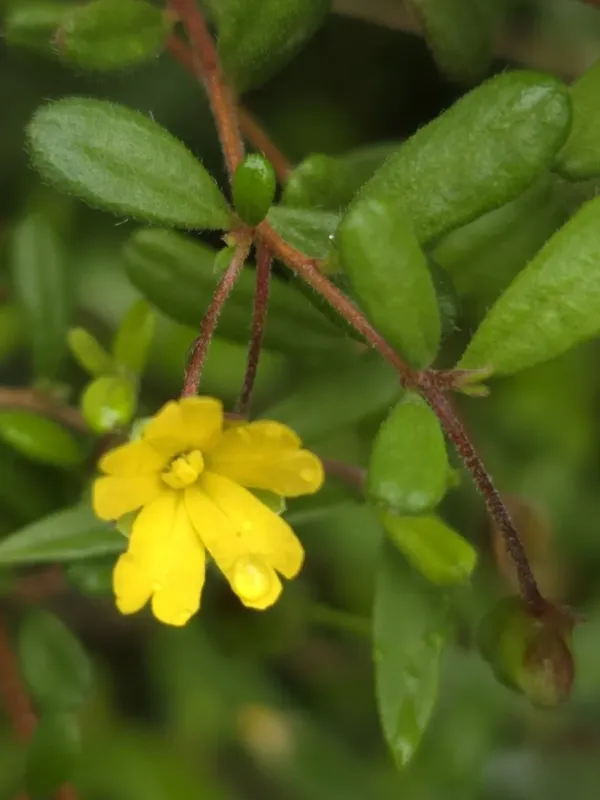
Botanically, the species is defined by its characteristic rough-textured foliage and vibrant yellow flowers consisting of five petals. The growth habit can vary between trailing and erect, making it a versatile plant for various landscaping applications and horticultural projects.
The successful cultivation of Hibbertia aspera requires well-draining soil with a slightly acidic to neutral pH. Proper soil structure is essential, as the roots are sensitive to waterlogging, which often leads to poor plant vigor and mortality in garden settings.
This shrub prefers a location with partial to full sunlight, although it benefits from protection against harsh afternoon sun in hot climates. It is not cold-hardy; therefore, in temperate regions, it is primarily kept as a container plant that must be moved indoors before the first frost.
Standard agricultural practices include regular watering, ensuring the soil surface dries slightly between irrigation cycles. Fertilization should be conducted with care, using low-phosphorus feeds that mirror the nutrient conditions of its natural Australian habitat to avoid chemical toxicity.
Main diseases and pests
The most common health issues for the Rough Guinea Flower stem from improper moisture management, which leads to root rot pathogens. Ensuring high-quality drainage and avoiding heavy, compacted soils are the primary preventive measures against fungal infections of the root system.
Pest management involves monitoring for common greenhouse pests such as scale insects and spider mites. These are particularly prevalent when the plant is kept in dry, indoor conditions. Maintaining adequate air circulation and moderate humidity levels effectively discourages pest colonization.