
Hibbertia linearis
Hibbertia linearis
Description
Growing requirements
Hibbertia linearis is a resilient evergreen shrub belonging to the Dilleniaceae family. Native to the coastal regions of eastern Australia, this plant is well-adapted to environments that feature sandy soils and periodic exposure to salt-laden coastal winds.
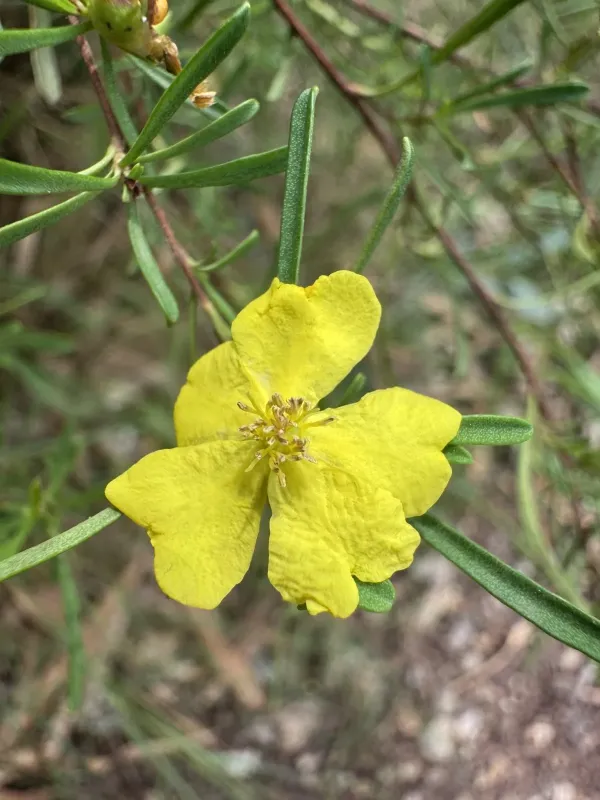
Botanically, the plant is recognized by its narrow, linear foliage and distinct yellow flowers that exhibit a characteristic five-petaled structure. Its growth habit can vary from upright to sprawling, depending on the specific environmental stressors and pruning practices applied.
The species requires a position in full sun to partial shade to maintain its vigor and promote prolific blooming. While it exhibits moderate tolerance to drought once established, consistent moisture is beneficial during the initial phases of growth or in containers.
Soil conditions are critical for Hibbertia linearis, necessitating well-draining, slightly acidic to neutral substrates. Heavy clay soils are generally unsuitable unless amended significantly with organic matter and grit to improve permeability.
Climatic requirements involve moderate temperatures, as the plant is not frost-hardy. In regions where temperatures drop significantly below freezing, container cultivation is recommended to facilitate indoor winter protection and ensure the longevity of the shrub.
Main diseases and pests
The primary agronomic threat to Hibbertia linearis is root rot, which typically stems from poor drainage or excessive irrigation. Ensuring the soil does not remain waterlogged is the most essential preventative measure for maintaining a healthy root system.
Pests such as spider mites and mealybugs can pose a threat, particularly in glasshouse environments or dry indoor climates. These pests feed on the sap, causing leaf yellowing and potentially stunting the overall development of the plant.
Powdery mildew may occur when humidity levels are high and air circulation is poor. Keeping the foliage dry and ensuring adequate spacing between plants significantly reduces the incidence of such fungal complications.
Regular monitoring of the foliage and stems for signs of infestation or necrosis is recommended. If symptoms appear, localized applications of horticultural soaps or systemic fungicides should be employed to mitigate the spread of the issue.
In terms of хозяйственное (economic) use, the plant serves primarily as an ornamental specimen in botanical collections and residential landscapes. Its ability to thrive in diverse containers makes it a versatile choice for modern landscaping designs.