
Hibbertia pedunculata
Hibbertia pedunculata
Description
Growing requirements
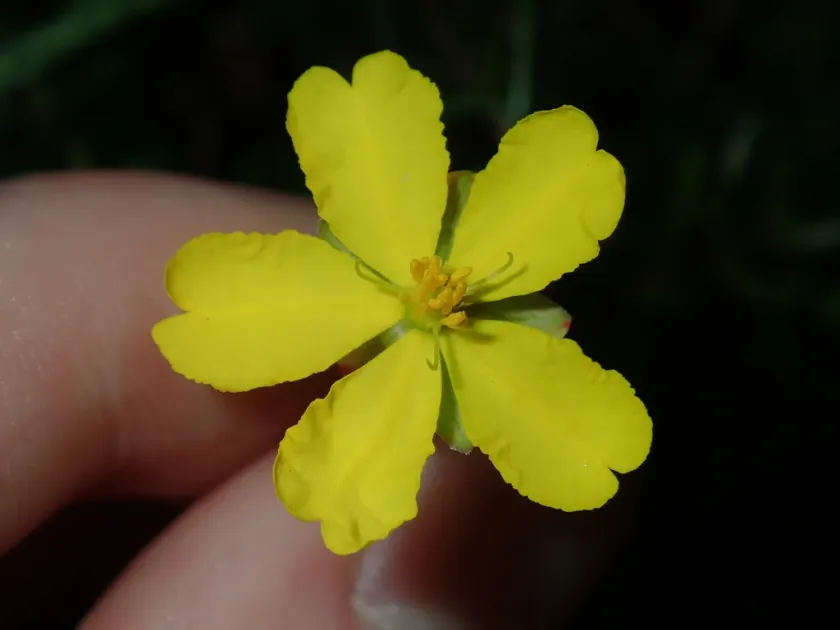
Hibbertia pedunculata is a distinct ornamental shrub belonging to the Dilleniaceae family. Native to the eastern regions of Australia, this species is highly valued for its creeping habit and prolific bright yellow flowers which bloom on prominent peduncles.
The botanical structure of the plant features small, narrow, evergreen foliage that forms a dense ground cover. It typically reaches a modest height, making it an excellent candidate for rock gardens or as a border plant in temperate landscape designs.
The cultural requirements are centered around providing excellent soil drainage. Hibbertia pedunculata thrives in sandy or well-draining loamy soils and is particularly sensitive to waterlogged conditions, which can quickly lead to root decay.
Environmental preferences include a location with ample sunlight or light partial shade. While it exhibits some tolerance for mild temperatures, it is not considered frost-hardy, necessitating winter protection or indoor cultivation in colder climate zones.
General maintenance involves moderate irrigation, allowing the substrate to dry out between watering sessions. Nutritional requirements are relatively low, and fertilization should be handled with caution, as high phosphorus levels can be detrimental to native Australian species.
Main diseases and pests
Root rot remains the primary threat to the longevity of the plant. This condition is almost exclusively associated with improper watering practices and poor drainage, underlining the need for a well-prepared growing medium.
Pest challenges include common greenhouse pests such as spider mites, which can proliferate rapidly during warm, dry conditions. Regular inspection and maintaining appropriate humidity levels are vital for effective pest management.
Mealybugs are another potential threat, often found in the leaf axils of the plant. These pests feed on sap and can cause stunted growth; they should be treated with appropriate contact insecticides upon early detection.
Fungal leaf spot may develop when airflow around the plant is restricted. Proper spacing and occasional pruning help facilitate air movement, thereby reducing the risk of foliage infections and keeping the plant in optimal health.
Maintaining a clean growing environment and disinfecting pruning tools after each use is essential practice. Such preventative measures significantly decrease the transmission of pathogens between plants in a collection.