
Hibbertia scandens
Hibbertia scandens
Description
Growing requirements
Hibbertia scandens, commonly known as the climbing guinea flower, belongs to the Dilleniaceae family. It is a robust, evergreen climbing shrub native to the coastal areas of eastern Australia, where it thrives in sandy soils and exposed maritime conditions.
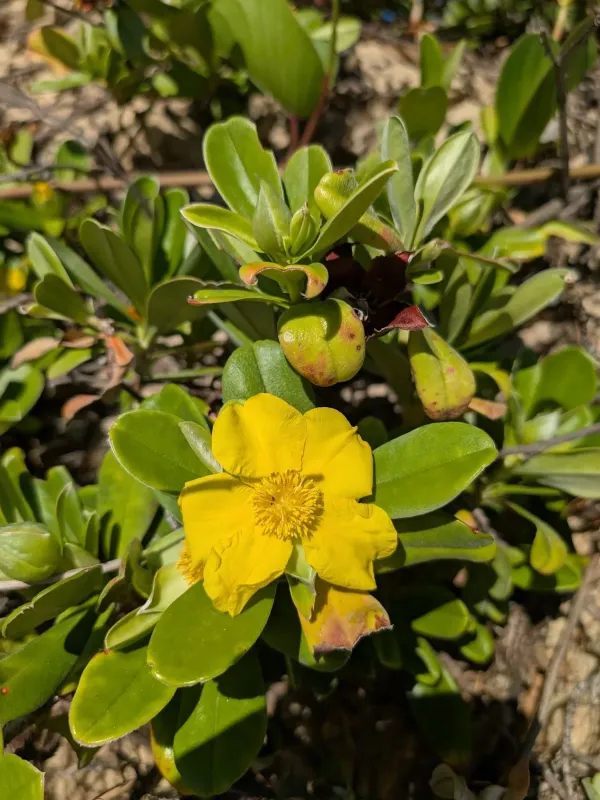
The plant features glossy, leathery dark green leaves and large, bright yellow, cup-shaped flowers that bloom throughout the warmer months. Due to its vigorous growth habit, it is widely utilized for covering fences, trellises, and as a groundcover in erosion-prone areas.
For successful cultivation, the plant requires a position in full sun to partial shade. It is highly adaptable to various soil types, provided they are well-draining. Waterlogging is detrimental to the plant and must be avoided by incorporating coarse sand or grit into the planting medium.
The species is suited to sub-tropical and warm-temperate climates. While it can withstand light frost, prolonged exposure to freezing temperatures will cause significant foliage damage and may kill the vine. In cooler regions, it must be grown in containers and brought indoors during the winter.
Maintenance involves periodic pruning to control the rampant growth and encourage denser foliage. Without regular trimming, the vine can become sparse and leggy at the base, losing its ornamental appeal. Fertilization with a slow-release balanced fertilizer in early spring ensures vigorous growth.
Main diseases and pests
Pest management for Hibbertia scandens primarily focuses on controlling scale insects and mealybugs. These sap-sucking pests are commonly found on the stems and undersides of leaves, and can be managed with horticultural oils or systematic insecticides when necessary.
Root rot caused by Phytophthora or Pythium species is the most common pathology, typically triggered by overly wet conditions or poor soil structure. Maintaining high oxygen levels in the root zone is the most effective preventative measure against these fungal pathogens.