
Heptapleurum farinosum
Heptapleurum farinosum
Description
Growing requirements
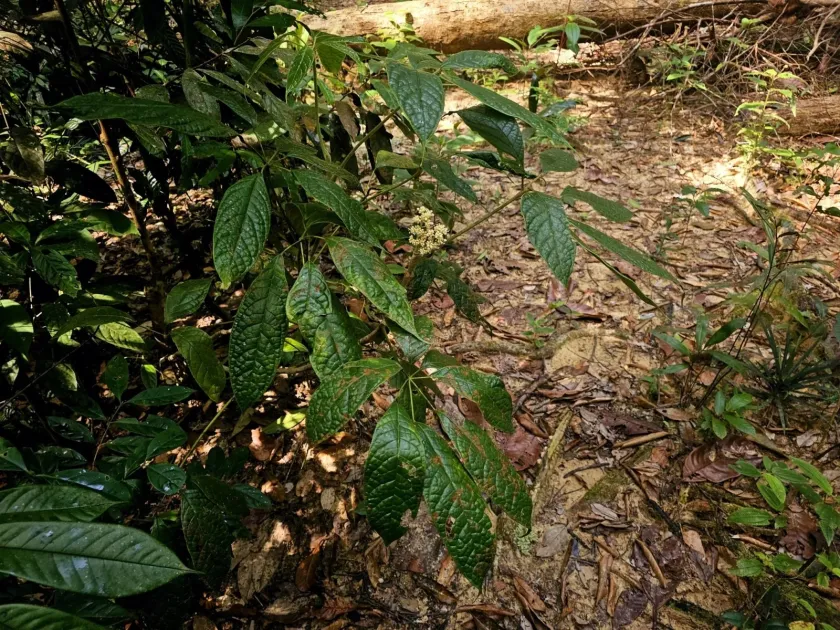
Heptapleurum farinosum belongs to the Araliaceae family and is recognized for its unique adaptation to tropical forest environments. This species is native to Southeast Asia, where it predominantly grows in humid conditions, often exhibiting semi-epiphytic growth patterns on host vegetation.
The botanical profile of this culture includes compound leaves covered with a fine farinose (mealy) bloom, which is the primary characteristic defining its species name. Its stems are robust and semi-woody, requiring structural support if cultivated as a specimen plant in specific agricultural settings.
Environmental requirements for this crop are strict regarding humidity and thermal stability. It thrives in an environment with high humidity (above 70%) and a consistent temperature range between 22 and 28 degrees Celsius, avoiding exposure to drafts or sudden cooling.
Soil management for Heptapleurum farinosum focuses on high porosity and moisture retention. A standard growing medium should consist of a mixture of peat moss, leaf mold, and perlite or coarse sand to facilitate oxygen exchange at the root zone.
Light exposure should be managed carefully; while the plant requires bright light for photosynthesis, direct midday sun is detrimental. Filtered or indirect light is ideal for maintaining the health of the foliage and promoting active vegetative growth throughout the season.
Main diseases and pests
The most significant threats to this culture are sap-sucking pests such as spider mites and mealybugs. These infestations typically thrive in dry indoor air, making humidity control the most effective preventative measure against widespread damage.
Fungal pathogens, particularly root rot, are common results of waterlogged soil conditions. Growers must ensure that drainage systems are efficient and that watering frequency is adjusted based on the substrate moisture content to maintain optimal plant hygiene.