
Umbrella tree
Heptapleurum actinophyllum
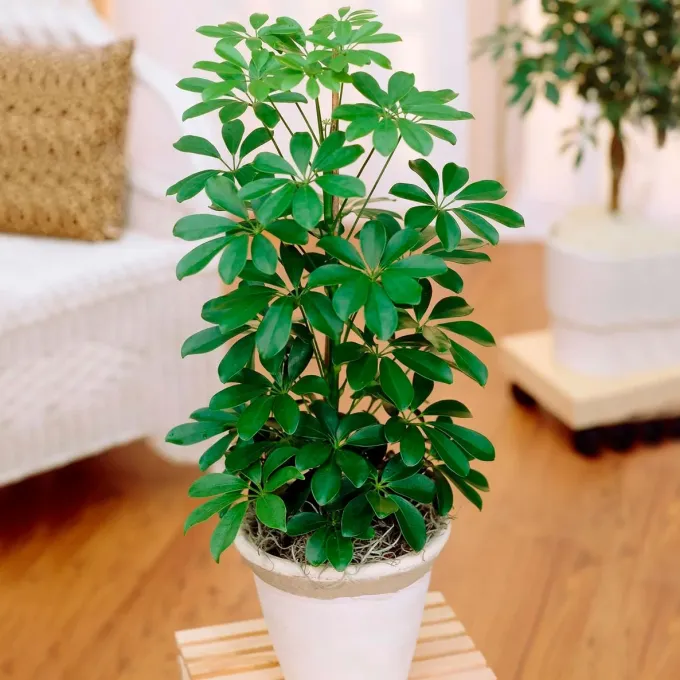
Description
Growing requirements
The umbrella tree (Heptapleurum actinophyllum), also known as the octopus tree, belongs to the Araliaceae family. It is native to tropical rainforests in Australia, New Guinea, and Java, where it grows as a large evergreen tree.
In cultivation, the species requires bright, indirect light to maintain its characteristic foliage density. Direct sunlight is often detrimental to the leaves, leading to chlorosis and physical damage during the peak of summer.
The ideal growing medium is a well-draining, nutrient-rich potting mix with a pH ranging from 6.0 to 7.0. Regular fertilization with balanced nitrogen-rich formulas is recommended during the active growing season to support its vigorous vegetative growth.
Water management is critical: the plant requires consistent moisture, but it is highly susceptible to root rot if the substrate becomes waterlogged for extended periods. Allowing the top inch of soil to dry out between waterings is standard practice.
Economically, this plant serves primarily in the ornamental horticulture industry. Its rapid growth and ability to tolerate diverse indoor climates make it a staple crop for interior landscaping and large-scale botanical installations.
Main diseases and pests
Common pests affecting the umbrella tree include spider mites, aphids, and scale insects. These pests often congregate on the underside of the leaves, potentially leading to leaf yellowing and general decline if not treated promptly.
Fungal pathogens such as Alternaria leaf spot or root rot caused by Phytophthora are the most frequent threats. These are generally mitigated by ensuring adequate air circulation and strictly avoiding over-irrigation of the root zone.