
Dwarf umbrella tree
Heptapleurum arboricola
Description
Growing requirements
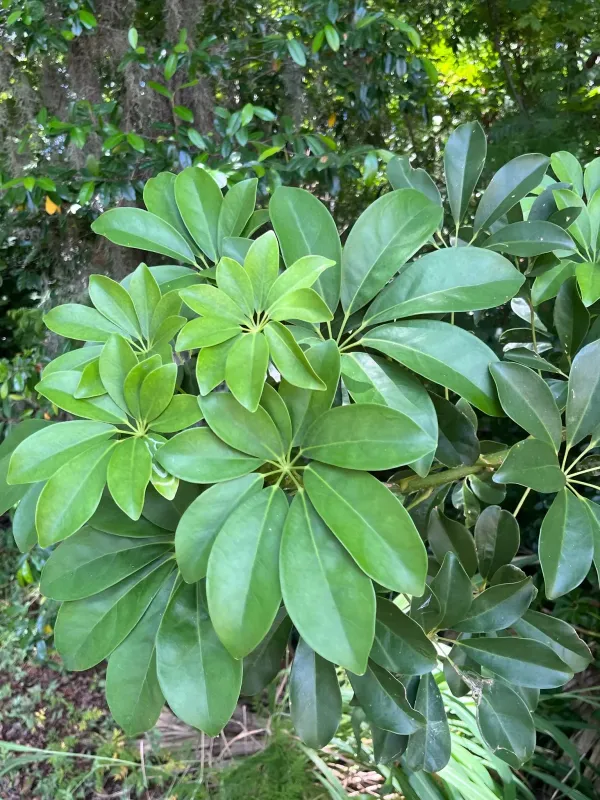
The Dwarf umbrella tree (Heptapleurum arboricola) is a popular member of the Araliaceae family. Native to the tropical regions of Taiwan and Hainan, this evergreen shrub is widely cultivated for its attractive, palmate leaves.
Cultivation requirements focus on bright, indirect light. While the plant can tolerate lower light conditions, consistent bright light ensures healthy foliage color and compact growth habits essential for decorative value.
The optimal temperature for development ranges from 18 °C to 25 °C. The plant should be protected from cold drafts and temperatures consistently below 15 °C, which may trigger severe stress or leaf abscission.
Soil management requires a well-draining, nutrient-rich potting mix. A standard blend of peat moss, perlite, and organic compost provides the necessary structure to prevent compaction and maintain adequate aeration for the root system.
Irrigation practices involve allowing the top layer of the substrate to dry out between waterings. Overwatering is the most common mistake, often leading to oxygen depletion in the root zone and subsequent dieback.
Main diseases and pests
The most frequent pest infestation in indoor cultivation is the spider mite. These tiny arachnids thrive in low humidity and can cause significant damage to the leaf structure if left unchecked.
Scale insects and mealybugs are persistent threats that colonize the stems and undersides of leaves. They deplete plant energy through sap-feeding, often resulting in secondary soot mold development.
Fungal diseases primarily include Phytophthora and Pythium root rots. These are usually direct consequences of waterlogged soil conditions combined with poor air circulation around the root zone.
Leaf spot diseases may occur in environments with high humidity and insufficient ventilation, causing brown or black lesions on the foliage which compromise the plant's aesthetic quality.
Effective management includes maintaining optimal plant hygiene, providing proper spacing for airflow, and using targeted chemical control methods only when cultural practices fail to eradicate the pest populations.