
Golden Trumpet Tree
Handroanthus chrysanthus
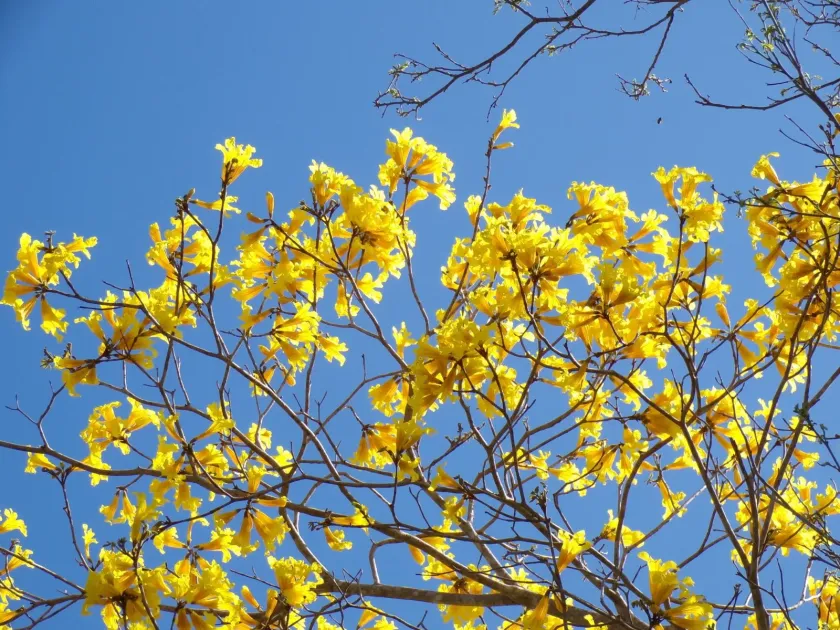
Description
Sowing dates
Seed propagation of Handroanthus chrysanthus is best carried out in the spring, when consistently high temperatures are established. Seeds are sown in a prepared substrate consisting of peat and sand, ensuring constant soil moisture.
Stratification of the seeds is recommended before sowing to significantly improve germination rates. Seeds typically germinate within a few weeks when air temperatures are maintained between 25 and 28 degrees Celsius.
Seedlings should be transplanted into individual containers after the formation of the second pair of true leaves. During the early stages of development, plants require regular watering and proper drainage to prevent root rot.
Planting in the field is carried out once the saplings reach a height of 30–50 cm, which usually takes about a year of intensive care in a nursery. The site selection must prioritize locations with maximum solar exposure.
In commercial cultivation for reforestation projects, container-grown plants that are well-adapted to local climatic conditions are used to ensure high survival rates in the field.
Growing requirements
As a member of the Bignoniaceae family, this deciduous tree requires significant light to thrive. It is a heat-loving species that does not tolerate freezing temperatures, making it suitable only for tropical or subtropical climates.
The tree is moderately demanding regarding soil conditions, preferring well-drained, fertile loams or sandy loams with a neutral to slightly acidic pH. Avoiding sites with high water tables is crucial for root health.
During the active growing season, the tree requires moderate irrigation, although mature trees exhibit high drought tolerance. In water-deficient conditions, the tree may shed its leaves to reduce transpiration.
Agrotechnical management includes regular application of balanced mineral fertilizers at the beginning of the rainy season, which stimulates vigorous vegetative growth and subsequent abundant flowering.
The plant is sensitive to strong winds, so windbreaks are recommended when establishing plantations. Proper canopy formation during the early years helps to strengthen the tree's skeletal branches.
Yield
Handroanthus chrysanthus is primarily valued for its high-quality hard timber, known commercially as Ipe. The tree's growth rate is relatively slow, which determines a long cycle of economic rotation.
Timber productivity is directly dependent on planting density and the consistency of forest management practices. Under optimal conditions, the tree reaches commercial log size within 20 to 30 years.
The wood is considered one of the most durable and dense in the world, possessing exceptional resistance to rot and insect infestation. It is highly sought after for high-end flooring, decking, and fine furniture.
Beyond timber, the tree holds high ornamental value. Its spectacular golden-yellow blossoms make it a focal point in urban landscaping and eco-tourism initiatives within its native range.
Economic viability is driven by a combination of high-value timber harvesting and the aesthetic contribution of the species to regional biodiversity and tourism landscapes.
Main diseases and pests
The primary pests for young trees include leaf-eating insects and aphids, which can damage tender new growth. Systemic contact insecticides are effective for managing these infestations.
Fungal diseases, such as root rot, often occur due to improper irrigation regimes or poor soil drainage. Prevention focuses on moisture management and the use of appropriate fungicides when needed.
Wood-boring insects, such as bark beetles, pose a threat to mature or weakened specimens. Regular sanitary inspections of plantations are essential to detect and contain potential outbreaks early.
Nematodes affecting the root system are also significant risk factors. The use of certified healthy planting stock and strict quarantine measures help prevent their introduction to new plantations.
- Regular pruning of dead or diseased branches
- Maintaining clear tree basins
- Ensuring adequate spacing between trees
- Monitoring foliage for signs of pests
- Using mulch to suppress competing weeds