
White trumpet tree
Handroanthus albus
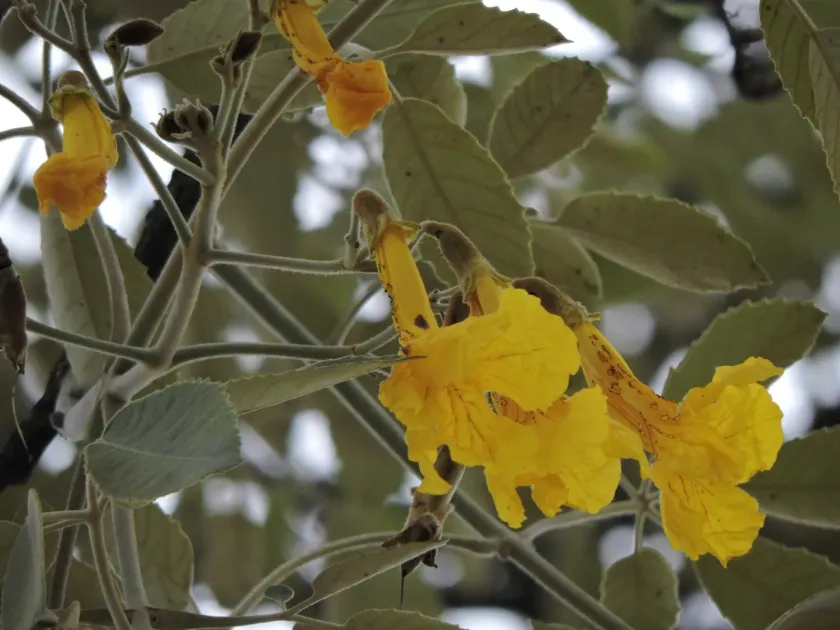
Description
Sowing dates
Propagation of the Handroanthus albus for commercial and ornamental purposes is primarily achieved through seed sowing or cutting methods within controlled nursery environments.
Seeds are sown in specialized, well-draining substrates at the beginning of the growing season when high air temperatures remain consistent.
High humidity levels are essential for successful germination, which is why seeds are often kept in greenhouses or nurseries equipped with irrigation systems.
Cuttings are prepared at the end of the active growth period using semi-hardwood stems treated with rooting hormones to improve survival rates.
Transplanting young saplings into open ground is recommended only after a robust root system has developed, typically when the tree is one to two years old.
Growing requirements
The White trumpet tree belongs to the Bignoniaceae family and is native to tropical and subtropical regions of South America, including Brazil and Argentina.
The crop requires full sun exposure and is sensitive to high winds, making the selection of site location and the use of windbreaks crucial for successful establishment.
It thrives in deep, fertile soils with a neutral to slightly acidic pH, requiring excellent drainage to prevent root moisture stagnation and subsequent disease.
The optimal temperature range for active vegetation is between 20 and 30 degrees Celsius, as the plant is highly susceptible to frost damage.
Maintenance involves regular but moderate watering during the initial years of growth, alongside the application of balanced organic or mineral fertilizers to boost biomass.
Yield
The primary economic value of the Handroanthus albus lies in its high-quality timber, known commercially as a type of ipe wood.
The wood of this species is renowned for its exceptional hardness, density, and natural resistance to decay, fungal attacks, and insect infestation.
Timber yield is determined by growth conditions and planting density, with the production cycle spanning several decades to reach a commercially viable diameter.
Furthermore, the tree is widely utilized in urban landscape projects as a decorative species, highly valued for its striking white blossoms during the flowering season.
The flowering period produces masses of brilliant white inflorescences, providing significant aesthetic value to both public parks and private garden spaces.
Main diseases and pests
Young seedlings can be vulnerable to pathogenic fungi if soil moisture is excessive, which may lead to root rot and significant growth retardation.
Common pests affecting the foliage include various leaf-eating insects that can compromise the visual appeal of the tree crown if not managed.
In its native range, the tree may also face pressure from specific wood-boring beetles that can damage the internal structure and affect the quality of the timber.
Disease prevention relies on strict adherence to agrotechnical practices, ensuring good soil aeration, and performing timely sanitary pruning of affected branches.
The application of pesticides and fungicides should be calculated precisely according to a treatment schedule to prevent the development of pest resistance.
Harvesting
Seed harvesting is conducted once the fruit capsules reach full maturity; these characteristic elongated pods will typically open as they begin to dry.
It is vital to perform harvesting during dry weather conditions to minimize the risk of seed degradation caused by moisture and potential mold growth during storage.
Following harvest, seeds are cleaned, separated from the fruit husk, and sorted by grade to ensure consistent germination rates in nursery settings.
For timber forestry, harvest occurs once the trunk diameter meets the target specifications, ensuring optimal structural integrity of the harvested lumber.
Subsequent wood processing requires strict adherence to kiln-drying and treatment protocols to preserve fiber structure and prevent warping or cracking of the wood.