
Guzmania sanguinea
Guzmania sanguinea
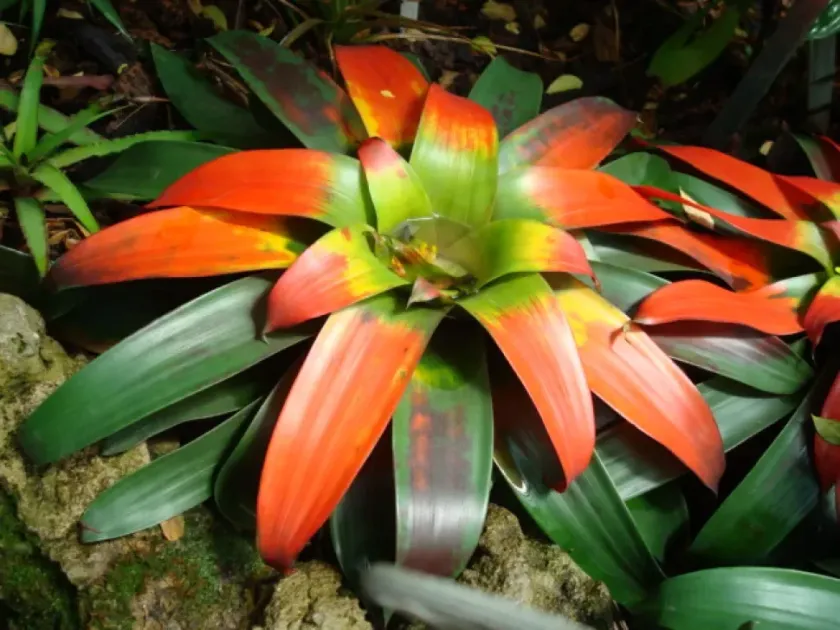
Description
Growing requirements
Guzmania sanguinea is a fascinating epiphytic plant belonging to the Bromeliad family. Originating from the dense, humid tropical forests of Central and South America, it naturally inhabits tree trunks, utilizing its roots mainly for anchorage rather than nutrient uptake from the soil.
To cultivate this species successfully, one must maintain a consistent temperature range between 20°C and 25°C. The plant is highly sensitive to cold, and temperatures dropping below 16°C can trigger dormancy or severe tissue damage, making it unsuitable for outdoor growth in temperate climates.
Humidity requirements for this plant are significant, ideally maintained at 70-80%. It is essential to mist the foliage regularly with soft water and place the container on a pebble tray filled with water to increase local humidity levels without soaking the potting medium.
The potting substrate must be specifically formulated for epiphytes to ensure adequate aeration and rapid drainage. A mixture containing pine bark, perlite, sphagnum moss, and high-quality peat is ideal to mimic the natural conditions of an epiphytic habitat on a tree branch.
Lighting should be bright but strictly filtered. While the plant requires significant energy for its brilliant foliage coloration, direct noon sunlight will scorched the leaves. Placing the plant in an area with dappled light or behind a sheer curtain is the best horticultural practice.
Main diseases and pests
Scale insects and mealybugs are the primary threats to the vitality of Guzmania sanguinea. These pests cluster in the leaf axils, sucking the sap and weakening the plant, which often leads to stunted growth and the development of unsightly sooty mold due to their honeydew secretions.
Root rot and crown rot represent the most serious pathological threats to the crop. These conditions are almost exclusively caused by poor drainage, overwatering, or allowing water to stagnate in the central reservoir (rosette) during periods of low ambient temperature or insufficient airflow.
Management of these threats involves a combination of preventative cultural practices and targeted chemical interventions. Keeping the growing area well-ventilated is critical, as stagnant air promotes the rapid spread of fungal spores and increases the population density of sucking insects.
Integrated pest management suggests using horticultural oils or systemic insecticides if infestations are identified early. For fungal control, reducing humidity levels slightly during winter months and ensuring the core of the rosette stays free of stagnant water is vital for long-term health.
Routine maintenance includes removing yellowing or damaged lower leaves to ensure the aesthetic quality of the specimen. Proper hygiene around the potting area prevents the accumulation of organic debris, which can serve as a breeding ground for pests and pathogens in nursery environments.