
Guzmania angustifolia
Guzmania angustifolia
Description
Growing requirements
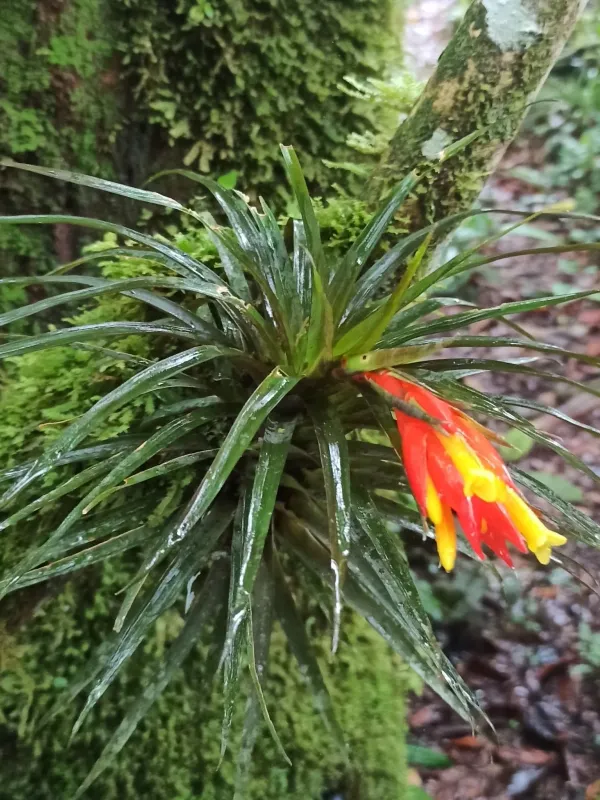
Guzmania angustifolia is a distinct member of the Bromeliad family, native to the tropical forests of Central and South America. In its natural habitat, this plant functions as an epiphyte, anchoring itself to tree branches and utilizing its specialized foliage to capture moisture and nutrients from the tropical atmosphere.
The plant exhibits a characteristic rosette growth habit with narrow, strap-like leaves that form a central reservoir. This unique structure allows the plant to trap water and debris, which gradually decomposes to provide the necessary minerals for growth in an environment where soil access is limited.
To ensure healthy growth in cultivation, the environment must mimic tropical conditions, with temperatures maintained between 20°C and 25°C. Exposure to cold drafts or temperatures below 15°C can cause significant stress, leading to stunted development or the failure of the plant to produce its signature colorful inflorescence.
The substrate requirement is non-traditional, as the plant demands exceptional aeration. An ideal mixture includes coarse bark, perlite, and dried sphagnum moss. This combination facilitates rapid drainage, preventing the roots from suffocating in a waterlogged medium, which is a common cause of failure in hobbyist settings.
Watering practices are central to Guzmania agrotechnics. The water should be poured directly into the leaf rosette, ensuring it is replaced regularly to prevent salt buildup or stagnation. During the active growth phase, foliar feeding is highly effective, as the plant absorbs nutrients efficiently through the base of its leaves.
Main diseases and pests
Common pests include scale insects and mealybugs, which often hide in the tight spaces between leaf bases. These insects can be manually removed with alcohol-soaked cotton swabs or controlled through systemic insecticide treatments applied directly to the affected areas of the rosette.
Root rot and fungal leaf spot are the most frequent pathological threats, primarily triggered by excessive moisture and poor air circulation. Maintaining a balance between humidity and ventilation is the best strategy for prevention, alongside avoiding excessive soil compaction that restricts root respiration.