
Guzmania monostachia
Guzmania monostachia
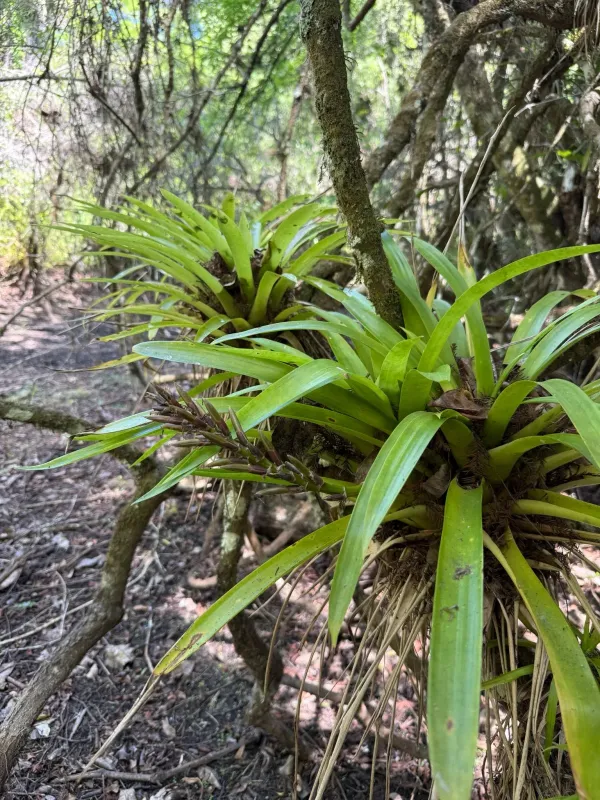
Description
Growing requirements
Guzmania monostachia is a species of flowering plant belonging to the Bromeliad (Bromeliaceae) family. Often referred to as the West Indian tufted airplant, it is an epiphyte that naturally grows on branches and tree trunks, absorbing moisture and nutrients through specialized leaf scales.
The plant is native to the tropical regions of the Americas, ranging from Southern Florida and the Caribbean to Brazil. Cultivating this species successfully requires a greenhouse or indoor environment that mimics the humid, stable conditions of tropical cloud forests.
The growing medium must be highly porous and acidic to replicate the natural habitat. A mix of orchid bark, peat moss, and perlite is recommended to ensure adequate drainage and aeration. Compact soil is highly discouraged, as it leads to root asphyxiation and death.
Irrigation practices for Guzmania involve filling the central tank of the leaf rosette, ensuring it is never empty, yet not stagnant for too long. Humidity levels should be consistently maintained between 60% and 80%, using automated misting systems where possible.
Regarding light, Guzmania monostachia requires bright but filtered light to maintain its vibrant foliage and bract color. Intense, direct sunlight should be avoided during the peak of the day to prevent chlorophyll degradation and leaf scorching.
Main diseases and pests
The primary pests affecting this crop include spider mites, mealybugs, and scale insects. These pests often congregate at the base of the leaves where moisture levels are highest, necessitating regular inspection and the use of horticultural oils or insecticidal soap.
Fungal infections, primarily involving root rot caused by Phytophthora species, are the most significant threat to the plant's health. Maintaining proper air circulation around the crown and avoiding cold, wet conditions during the night are critical for effective disease prevention.