
Guzmania minor
Guzmania minor
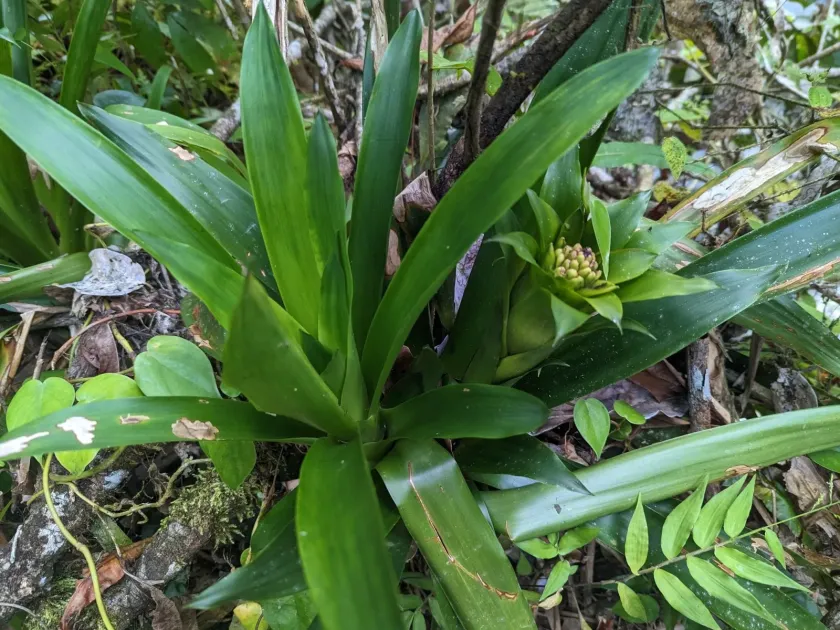
Description
Growing requirements
Guzmania minor is a stunning epiphytic plant belonging to the Bromeliad family. Originating from the tropical regions of Central and South America, it typically grows in humid forest environments, often anchored to tree trunks or rocky surfaces.
To successfully cultivate this species, a stable temperature range between 20°C and 25°C must be maintained. High humidity is essential, as the plant relies on its leaf rosette to absorb moisture and nutrients from the ambient air.
The substrate must be highly porous and well-draining to mimic the plant's natural epiphytic habitat. A mixture of pine bark, peat moss, and perlite is recommended to prevent root suffocation and maintain adequate aeration.
Lighting conditions should be bright but indirect. Direct sunlight can cause severe scorching of the leaves, so the use of shade cloth in professional greenhouse setups is vital for quality control.
Watering requires precision: water should be poured directly into the central tank of the rosette, using only soft, room-temperature water. Maintaining a dry perimeter around the base of the plant is necessary to prevent stem rot.
Yield
The primary horticultural use of Guzmania minor is as a decorative potted plant for interiors. Its commercial value is derived from its long-lasting, vibrant inflorescence, which provides a high-end aesthetic appeal.
Yield in a commercial setting is measured by the number of high-quality, uniform flowering plants produced per cycle. Growers often focus on accelerating the vegetative phase to meet market demand effectively.
Propagation is primarily vegetative through offsets, locally known as pups, which develop at the base of the mother plant. Harvesting these for the next production cycle is a key part of the farm's operational workflow.
Given its compact habit, Guzmania minor allows for high-density production per square meter, significantly increasing the profitability of greenhouse space.
Success in production is defined by the plant's ability to maintain its deep color and turgor, ensuring it remains market-ready for several months after reaching maturity.
Main diseases and pests
The most common pests affecting Guzmania minor include mealybugs and scale insects. These thrive in low-ventilation environments and can cause significant damage by extracting sap from the leaves.
Root and basal rots are the most serious diseases, usually triggered by overwatering or poor drainage. Once established, these conditions are often fatal to the plant, necessitating strict irrigation protocols.
Integrated Pest Management (IPM) practices are highly recommended, including the use of biological controls or targeted, systemic insecticides when pest populations cross the economic threshold.
Regular sanitation of the greenhouse environment is essential to prevent the spread of fungal pathogens. Any dead or decaying organic matter should be removed promptly to eliminate potential breeding grounds.
Proper airflow is the most effective preventative measure against both pest outbreaks and the spread of moisture-related fungal infections within the crop canopy.