
Guzmania musaica
Guzmania musaica
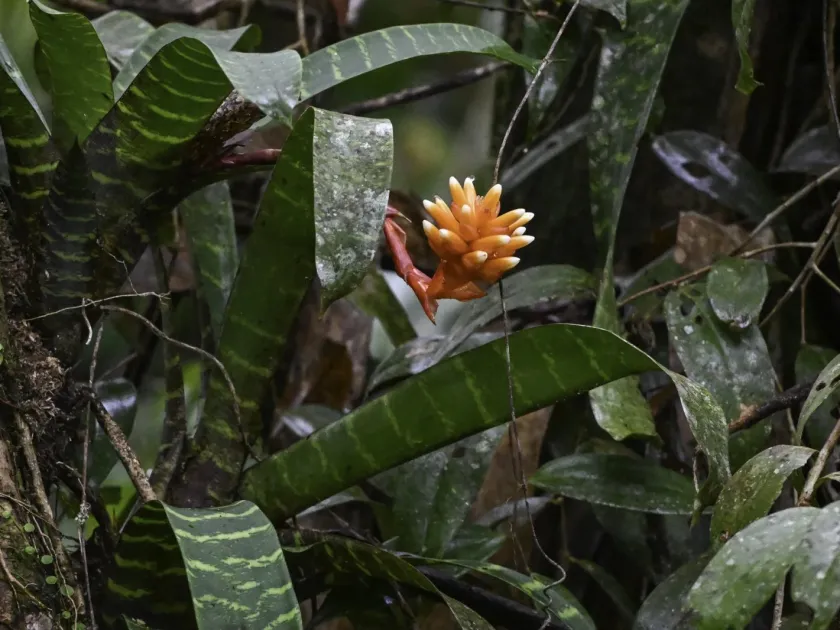
Description
Growing requirements
Guzmania musaica is a striking member of the Bromeliad family, native to the tropical rainforests of Central and South America. As an epiphyte, it typically grows on trees or rocks in its natural habitat, drawing nutrients from moisture and organic debris.
The plant is characterized by a dense rosette of foliage marked with intricate, mosaic-like dark green patterns. Its inflorescence is highly decorative, featuring vivid bracts that remain vibrant for several months under favorable indoor conditions.
To thrive, Guzmania musaica requires bright, indirect light. Direct sunlight can easily scorch its delicate leaves, while insufficient light may cause the mosaic pattern to fade and reduce the plant's overall vigor.
The growing medium must be porous and well-draining. A professional substrate mix usually includes pine bark, sphagnum moss, and perlite, which ensures the root system receives sufficient oxygen while retaining necessary humidity levels.
Watering is unique for this species; water should be poured into the central tank formed by the rosette. It is crucial to use soft, room-temperature water and change it regularly to maintain hygiene and prevent the accumulation of stagnant debris.
Main diseases and pests
Common pests affecting this crop include scale insects and mealybugs, which thrive in the tight spaces between leaf bases. These pests can be difficult to detect until the plant starts showing signs of stunted growth or yellowing leaves.
Excessive moisture combined with poor ventilation is the primary cause of fungal and bacterial infections. Root rot and heart rot (rot of the center rosette) are common issues that typically occur due to improper watering techniques.
Preventive measures include maintaining good airflow and ensuring the substrate is not overly compacted. If a pest infestation is identified, early treatment with horticultural oils or mild systemic insecticides is highly recommended.
Spider mites can become a significant threat during the winter months if the indoor humidity drops below 50%. Regular misting and keeping the environment stable are essential to keep the foliage healthy and resistant to these pests.
Monitoring the plant's health periodically allows for early intervention against disease. If signs of decay appear, it is vital to reduce humidity slightly and ensure that no water is trapped in the center rosette until the plant recovers.