
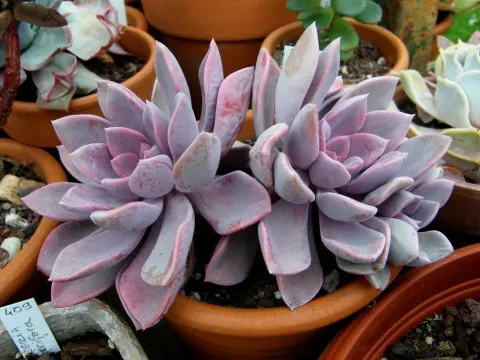
Graptoveria
Graptoveria
Graptoveria is a genus of intergeneric hybrids created by crossing species from the Graptopetalum and Echeveria genera, both belonging to the Crassulaceae family.
What the section contains

Graptoveria
Originating from the arid, rocky terrains of Mexico, these succulents have evolved to thrive in nutrient-poor, well-draining soils with exposure to direct or intense sunlight.
The primary agronomic requirement for Graptoveria is access to bright, indirect light; without sufficient illumination, the plant will etiolate, losing its compact, rose-like structure.
Growing media should prioritize drainage; a commercial cactus potting mix amended with inorganic components like pumice, coarse perlite, or volcanic rock is ideal for root development.
Temperature management is crucial: while they prefer warm conditions (20–26°C), they require a winter dormancy period with cooler temperatures (10–15°C) to stimulate future flowering.
Overwatering is the single most common cause of mortality in Graptoveria, leading to rapid root rot and systemic collapse of the succulent tissue, particularly in winter.
Mealybugs are the most persistent pests, often clustering in the tight crevices between leaves, where their cottony white excretions are easily visible upon close inspection.
High humidity combined with poor airflow creates an environment prone to fungal infections, which often manifest as dark, sunken spots on the leaves or stem surface.
Aphids occasionally target the tender new growth of the flower stalks, necessitating manual removal or the application of gentle insecticidal soaps to protect the inflorescence.
Root rot, if detected early, requires immediate repotting into dry substrate and trimming of necrotic roots, followed by a strict cessation of watering until new growth is observed.